
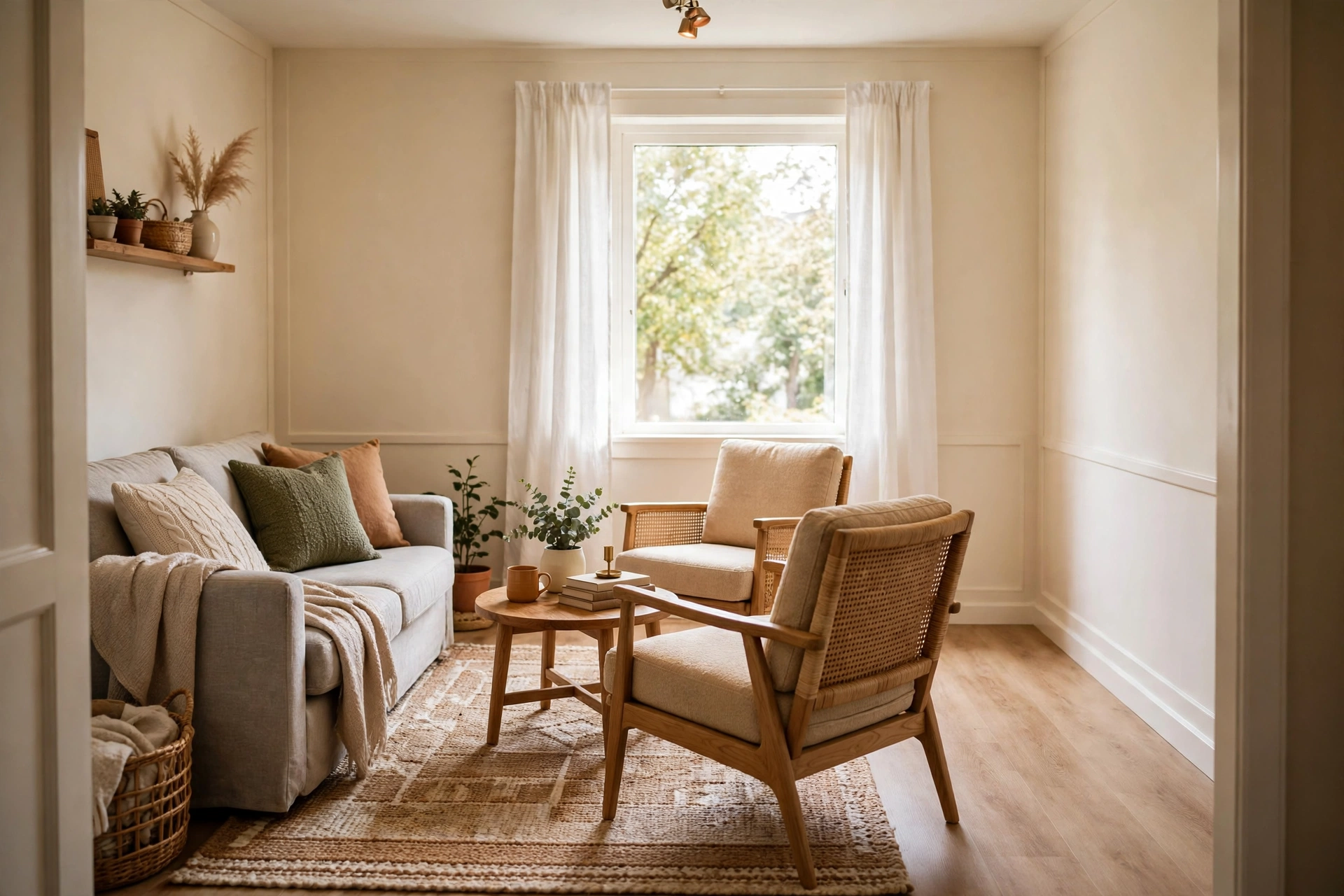
My friend moved into a small flat last spring. Nice light. Good floor. She called me two days later and said the living room felt like a storage box with a sofa in it. We did not buy anything. We moved the sofa off the wall by a hand’s width. We took one side table out. We moved the rug so the front legs of the sofa sat on it. Same room. Same stuff. It felt twice as calm. That is the thing with small living rooms. Size matters, sure. But layout does most of the daily damage. This post walks through the mistakes we see again and again, and how to fix each one with moves, not buys. It links with our studio apartment layout ideas because the same rules run a studio’s living zone.
Mistake one: pushing all furniture to the walls
It feels logical. Push it all out, keep the middle clear, gain space. In a small room it often does the reverse. You get a wide empty middle no one uses and a ring of furniture hugging the walls like it is scared of the room. The eye reads the ring as clutter. Try this instead. Pull the sofa off the wall a few inches if you can. Even a small gap gives shadow and depth. Group seating around the rug, not around the walls. Leave walk paths clear, but let the group feel close enough to talk without shouting. Measure your walk paths before you move. You need a clear path from door to sofa to kitchen that does not force a sideways shuffle. Mark it with tape on the floor if it helps. Move, sit, walk it. Fix from there.
Mistake two: a rug that is too small
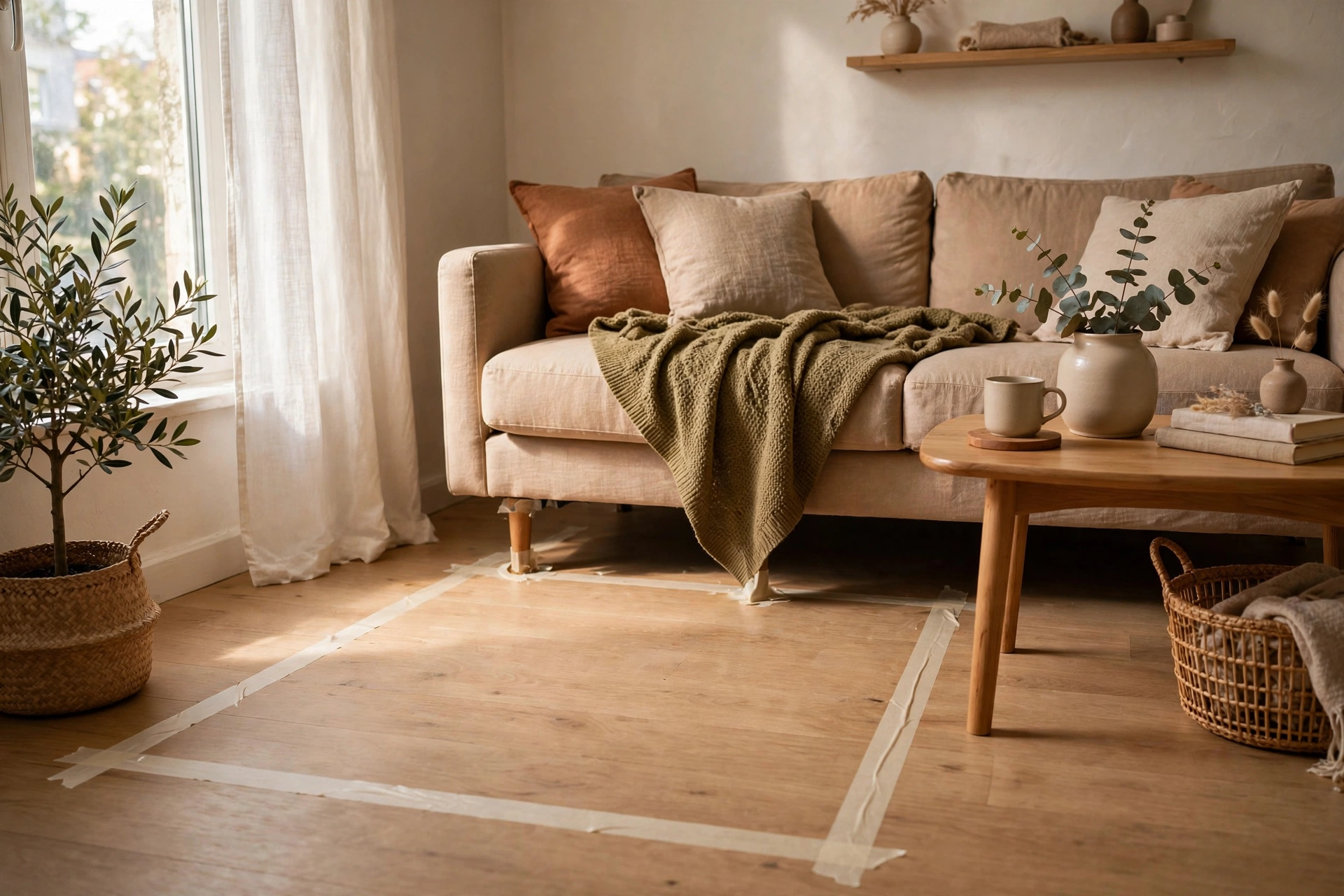
A tiny rug under just the coffee table makes the room read as bits. A rug that is too small chops the floor into small pieces, and small pieces make the room feel small. You want the front legs of your sofa and chairs on the rug if you can. That ties the group into one zone. The rug becomes the base of the living area, not a bath mat in the middle. Measure your seating group first. Tape the rug size on the floor. Sit in each seat. Do your feet land on rug or bare floor in a way that feels odd. Adjust the tape before you buy or move a rug you own from another room to test. If you have no rug, that is fine too. A bare floor with a clear group can feel bigger than a group cut by a small rug. Do not buy a small rug just to have one.
Mistake three: blocking light and paths
A tall shelf in front of a window. A sofa back cutting the only path. A side table jutting into the door swing. Each one makes the room feel tight because your body and your eye keep hitting a stop. Walk the room slow. Door to window. Door to sofa. Sofa to kitchen. Where do you twist, step over, or duck. Those spots are layout blocks. Keep tall items on walls that do not hold the main window if you can. Keep the window wall low — sofa back, low stand, plants that do not block the glass. Light that can spread across the floor makes the room read bigger at once. In small homes, storage loves to creep into paths. Our small apartment storage ideas post helps you move that storage to walls, doors, and under-bed spots so paths stay clear.
Mistake four: too many small pieces
One sofa, three side tables, two footstools, a small shelf, a plant stand, a lamp on each table. Each piece is small. Together they are visual noise. Your eye jumps from leg to leg to leg. The room feels busy and so it feels small. Count legs. It is a funny trick that works. More legs on the floor, more clutter feel. Pick fewer, larger pieces over many small ones. One coffee table that holds what you need beats three tiny tables that each hold one cup. If a piece does only one job and that job is rare, it may not earn floor space. A side table you use daily earns it. A stand that holds a decor item you never touch may not. This is where multi-functional furniture for small apartments helps. A storage ottoman can be seat, table with a tray, and blanket box. One piece, three jobs, fewer legs.
Mistake five: no clear zones
In a small living room that also holds work, eating, and play, a lack of zones makes it all blur. Laptop on the sofa, plates on the coffee table, toys under your feet. The room feels small because it has no order. You do not need walls to make zones. A rug marks living. A small desk against a wall marks work. A basket in one corner marks play. Light helps too — a lamp by the reading chair says that spot has a job. Keep each zone’s things in that zone. Work stuff creeps. Give it a box or drawer in the work zone. When work ends, close it, box it, done. The living zone comes back.
Mistake six: heavy, dark, low pieces all together
Dark wood, low height, wide base — one piece like that can ground a room. A full set of them can sink it. In a small room, a mix helps. Legs that lift a piece off the floor let you see floor under it. Floor you can see reads as space. You do not need to replace furniture to fix this. Raise what you can in feel — put a dark low item against the lightest wall. Add a light throw or cushion if you own one. Move the darkest piece out of the window light path so it does not eat the light. Check height mix too. If every piece is the same low height, the room can feel flat and cramped. One taller item — a shelf or lamp — gives the eye a lift. Keep that tall item on a wall, not in a path.
Mistake seven: cords, clutter, and surfaces with no rest
A small room shows every cord and every pile. TV cords down the wall. Chargers across the floor. Coffee table covered in remotes, post, cups, books, keys. Give cords a path. Along the wall, behind the stand, in a box with holes if you have one. It takes ten minutes and the floor line goes clean. Edit surfaces. A coffee table needs rest space — empty space where your eye can land. Keep two or three items on it, grouped on a tray if you like. The rest gets a home in a drawer, basket, or shelf. The chair pile counts here too. One chair that collects clothes will make the whole living room feel messy. Our FAQ below covers that trap.
A one-hour fix order
Do not try to redo the room in a day. Try this order. First, clear paths. Move what blocks door swings and walk lines. Second, group seating on or around the rug, front legs on if you have a rug. Third, take out one small piece you use least. Live a week without it before you decide. Fourth, fix cords and one surface. Fifth, check light — move one tall or dark item off the window wall. Sit in each seat. Look at the room from the door. That door view is what guests get and what you get when you come home. If it feels calm from the door, you did it right. Take a photo before and after. Small rooms change in ways that are hard to recall once you are used to the new layout.
FAQ
How do I keep a small living room from looking cluttered?
Group seating in one zone, keep paths clear, and give surfaces rest space. Put daily items in a tray or basket so loose items read as one group. Cords along the wall help a lot.
How can I make a small room feel less cluttered without buying more storage?
Take one small piece out, clear the window wall, and fix cords and one surface. Use storage you have — a basket, a drawer — rather than buying a new holder. Often the room needs less in it, not more holders.
Should a small living room sofa go against the wall?
It can, but a small gap behind it often looks better if you have the inches to spare. What matters more is that the seating group feels tied together and paths stay clear. Test both and sit in it.
How do I stop “the chair” where clothes pile up?
Give those clothes a closer home: a hook or basket where you actually drop them, near the bedroom or door. Clear the chair each night for a week to break the habit. If the pile returns, the chair is in the drop path — move the home, not just the pile.
Are over-door organizers worth it in a small apartment?
They can help in living rooms for light items like scarves or small bags if the door still closes well. Check top gap and keep weight low. Check the maker’s manual for the exact hook and door type.
How we made this guide
We wrote this from room checks you can do at home: walk the paths, count the pieces, test rug tape on the floor, and look from the door. We do not claim universal sizes because every room and sofa is shaped in a new way. Measure your group and your paths, move first, and only buy when a move proves you need a piece in a set size.
By InterestBlog24 Editorial Team.