
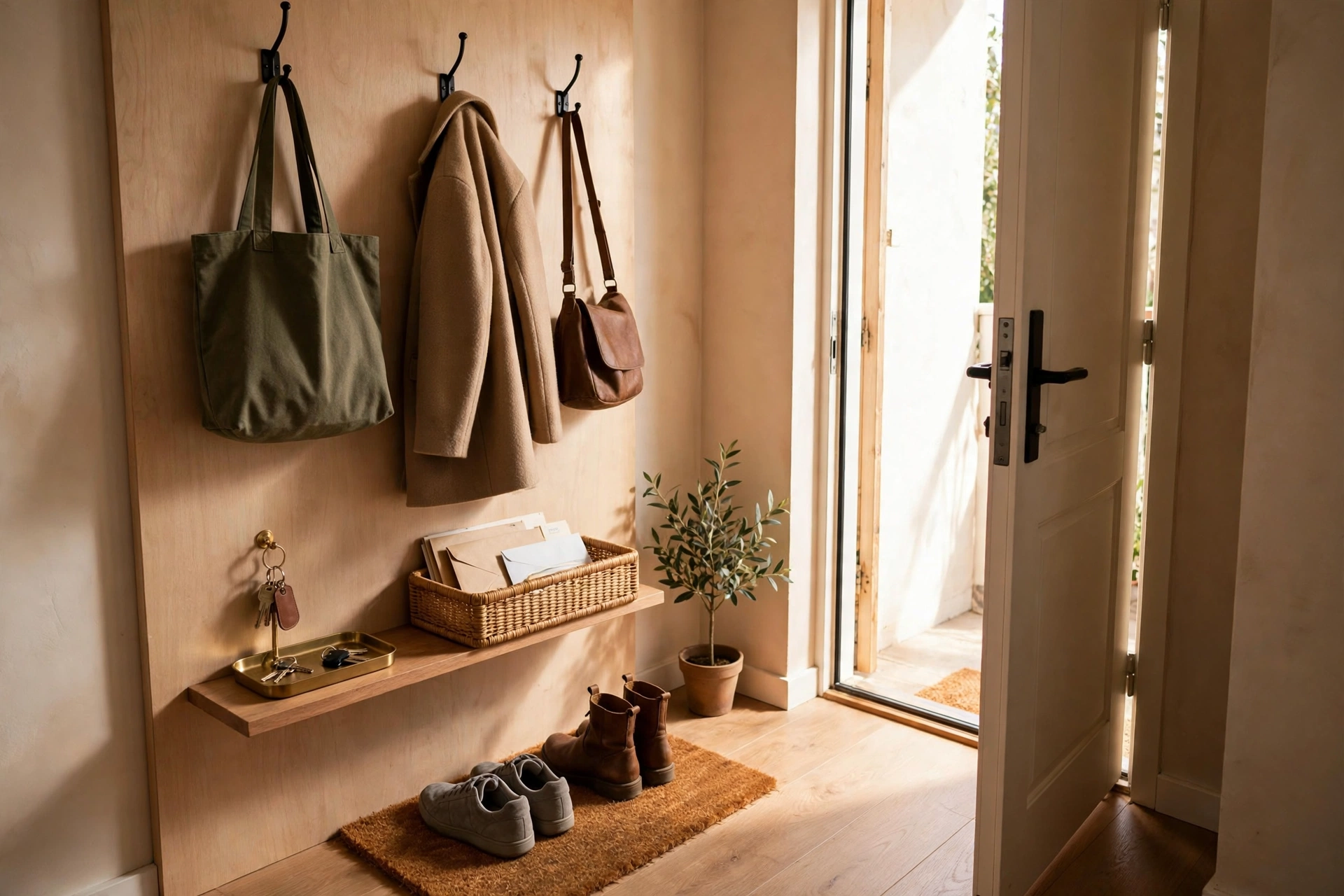
- Keys in one spot.
- Mail in one tray.
- Shoes in one line.
- Bag on one hook.
That tiny list is the whole system. Clutter at the door does not come from laziness. It comes from having no set spot for the five things you carry in each day. They land on the first flat surface — and stay there. This routine gives each thing a home right where you walk in. It builds on our entryway storage ideas for homes with no coat closet and fits the reset habits in our small home cleaning and declutter routines pillar. The storage ideas also link back to our small apartment storage ideas for the rest of the home.
Name the five things that land at your door
Watch your entry for two days. Write down what lands there. For most small homes it is the same set: keys, mail and papers, shoes, bag, coat or scarf. Kids add school items. Dog owners add a leash and towel. Pick spots for only those five. Do not build a system for things that show up once a month. Those can go straight to their room. If two people use the door, each person needs a hook and a shoe spot. Shared spots fail when one person’s items fill them. Small labels or a color dot per person can help at first. Keep the spots within arm’s reach of the door. If you must walk across the room to put keys down, keys will land on the counter instead. Near beats perfect.
Set up one spot per thing
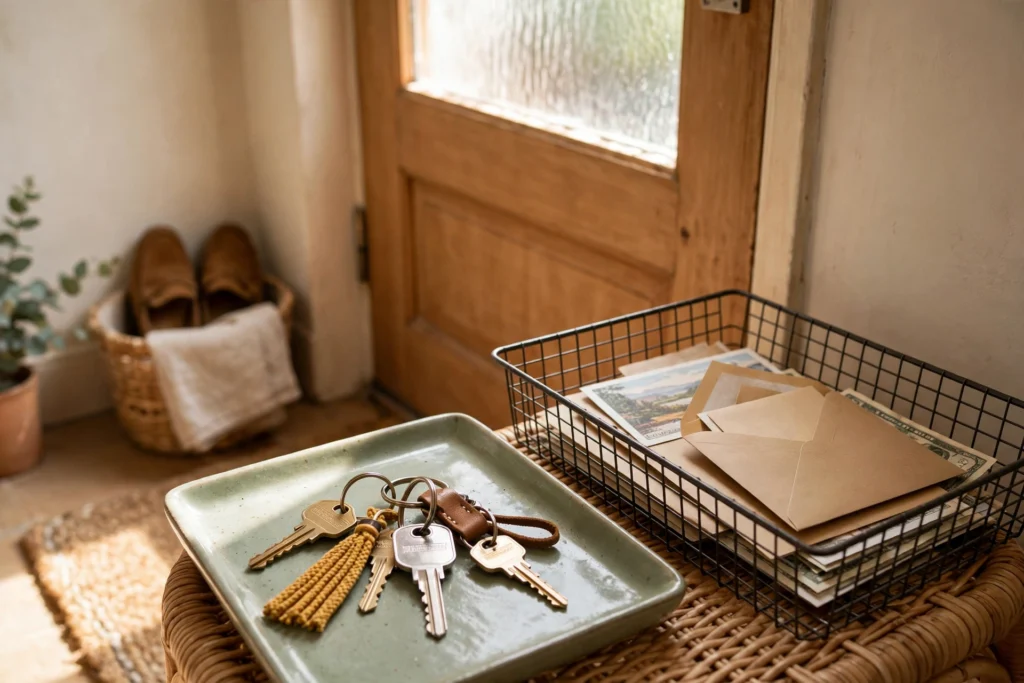
Keys: one bowl, tray or hook. Put it at hand height as you enter. Use the same hand each time if you can. Habit grows when the move is the same each day. Do not use a deep bowl where keys hide under papers. A flat tray or a single hook works better.
Mail: one tray or wall pocket. All mail goes in the tray the moment you come in. No piles on the table. Sort the tray twice a week. Recycle junk at once. Put bills or forms in one folder. The tray should be small. A small tray fills fast and tells you to sort it.
Shoes: one line or mat. Pick how many pairs live at the door. For many small homes, one or two pairs per person is enough. Rest go in a closet or under the bed. A mat with a lip holds wet shoes and saves the floor. Stand boots upright if the maker notes say that shape helps them hold form.
Bag: one hook or chair back that is only for bags. Hooks at shoulder height keep bags off the floor. Check wall type and landlord rules before you fix hooks. Removable hooks need the right surface and weight limit — read the maker pack for your wall type and the exact hook. When in doubt, use a freestanding rack or the back of a sturdy chair.
Coat and scarf: one hook each. Heavy winter coats may need a closet. Daily coat and scarf can live on door hooks if the door still opens well and the items do not drag.
The 60-second entry routine
Come in. Close the door. Keys on tray. Mail in tray. Shoes on mat. Bag on hook. Coat on hook. That is it. Sixty seconds when the spots are clear. The trick is not speed — it is order. Same order each time builds a habit your hands learn. Leaving is the reverse. Bag off hook. Keys from tray. Shoes on. A quick look: do I have what I need? That look stops the second trip back for keys. Teach the routine with words, not hints. “Keys live here” said once, with the tray in hand, beats weeks of moving keys yourself and feeling cross.
The 60-second exit reset at night
Once a day, reset the entry. Best time is after dinner or before bed, when the day’s items have landed. Put stray shoes in line. Move one item that does not belong at the door to its room. Empty the mail tray if it is full. Hang the bag so morning is easy. This reset is part of the wider home rhythm in our small home cleaning and declutter routines. Small daily resets stop big weekend piles. If the entry still looks full after the reset, you have too many items at the door. Move one pair of shoes or one bag to storage. The entry should hold daily items only.
Small rentals: what works without drilling
Many renters can not drill. That is fine. A freestanding coat rack in a corner, an over-door hook rack the landlord allows, and a shoe mat need no holes. Check door clearance — the door must close and latch well with any over-door rack. Read the rack maker notes for door type and weight. A small bench or sturdy box gives a seat for shoes and storage inside for hats or gloves. Measure the space by your door first. Leave room for the door swing and a clear walk path. Our entryway storage ideas with no coat closet has more no-drill setups for narrow halls and studio doors. Command-style removable hooks can work on smooth, clean surfaces. Follow the maker steps for surface prep, wait time and weight. Test with a light item first. On paint that is old or weak, even removable hooks can pull paint — ask your landlord if you are not sure.
Wet days and guest days
Rain and mud test any entry. Keep a small towel on a hook for wet shoes, paws and umbrellas. A tray with a lip under shoes holds water until you can tip it in the sink. Wipe the tray dry so it does not smell. Umbrellas drip. A tall bin or bucket by the door holds them upright. Empty it after the rain stops. For guests, clear one hook and a bit of shoe space before they arrive. Guests copy what they see. If they see a tray and hooks in use, they will use them too. That saves your sofa from becoming the coat pile.
When the system slips
It will slip. A busy week, a late night, a new school term — items pile up. Do not scrap the system. Reset it. Take five minutes. Put each item in its spot or out of the entry. If an item has no spot and keeps landing at the door, it needs a spot or it needs to live elsewhere. Add one hook or move one item out. Change the setup, not your standards. Kids and guests need time. Keep spots low enough for kids to reach. Keep words kind and short. Systems that feel like rules get dodged. Systems that feel easy get used.
FAQ
How do I stop “the chair” where clothes pile up near the door? Give the bag and coat a hook each right by the door, and keep the chair out of the entry if you can. When the hook is closer than the chair, hands pick the hook.
Are over-door organizers worth it in a small apartment entry? They can help for light items if the door still closes well and your landlord allows them. Check the maker notes for door fit and weight, and do not overload them.
How many pairs of shoes should live at the door? For most small homes, one or two pairs per person works. Keep the rest in a closet or storage. A small shoe line stays neat and leaves walking room.
What if my entry has no wall space for hooks? Use a freestanding rack, a small bench with storage, or the back of a sturdy chair for bags. Measure door swing and walk path first so the setup does not block the way.
How do I keep mail from piling up? Use one small tray. Put all mail in it when you walk in. Sort twice a week, recycle junk at once, and file forms in one folder. A small tray tells you when to sort.
How we made this guide
We wrote this from common small-home entry layouts, landlord-safe storage notes and maker steps for removable hooks and racks. We did not test products in homes. Measure your door swing and wall type, and pick spots that fit how your household comes and goes.
By InterestBlog24 Editorial Team.