
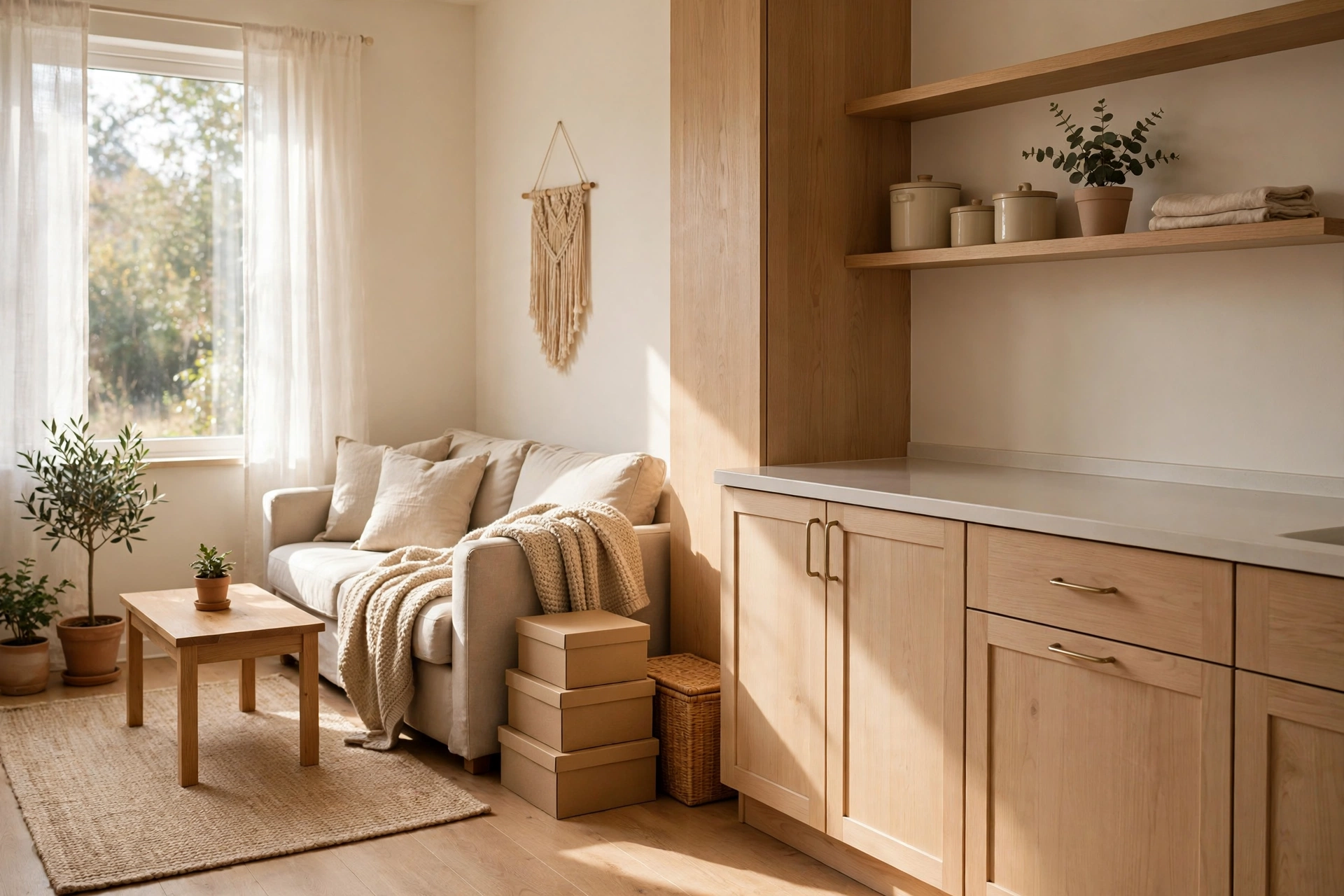
Day 1 starts at the door. Day 7 ends with clear floors. This plan does one zone a day so you do not have to empty the whole flat at once. Each day takes about 30 to 60 minutes for most small flats. Your time may vary. A home with lots of stored items will take longer. Work at your pace. Done beats fast. You need three bags or boxes: keep here, move to another room, and out (donate, recycle, or toss). Label them so you do not mix piles.
Before Day 1: set your out path
Decide where “out” items go before you start. If bags sit by the door for a week, you will trip over them and lose heart.
- Pick a donate drop spot and a day to go.
- Put recycling by the door so paper leaves fast.
- Use strong bags for trash that leaves the same day.
Tell anyone you live with the plan. Ask them to sort their own items on the day that zone comes up. For the routine that keeps the flat clear after this week, see our pillar on Small Home Cleaning & Declutter Routines.
Day 1: Entryway
The entry holds coats, shoes, bags, mail, and keys. It is small, but it sets the tone for the whole flat. Pull out all shoes. Wipe the floor or tray. Keep only the pairs you wear this season by the door. Store the rest in a closet or box you can reach but do not need each day. Add a small tray or bowl for keys and a hook or box for mail. Toss junk mail now. Sort bills into one folder. If you have no coat closet, our guide on Entryway Storage Ideas for Homes With No Coat Closet shows low-cost hook and tray setups that do not need big furniture, but today just clear what you can with what you own. Finish by sweeping the entry floor. A clean entry makes Day 2 feel easier.

Day 2: Kitchen counters and cupboards
In a small kitchen, clutter on the counter steals work space. Start there. Clear one counter at a time. Wipe it down. Put back only what you use most days. Move tools you use once a month into a cupboard or box. Open one cupboard at a time. Take out food and check dates. Toss stale items per your local food waste rules. Group like items so you can see what you own. Face labels out if that helps you. Do not buy new boxes yet. Use what you have. A washed food tub or a small tray can group packets and stop them sliding. If food clutter is your main problem, our post on Small Kitchen and Bathroom Organization has grouping ideas that keep daily items in reach and rare items out of the way. Today, just get counters clear and one or two cupboards sorted.
Day 3: Bathroom
Small baths hold bottles fast. You may find three of the same thing open at once. Pull all items from the shower ledge and sink edge. Wipe surfaces. Put back one of each item you use daily. Store extras in a closed box or cupboard so the edge stays bare. Check meds and creams for dates. Follow local rules to toss old meds. Do not flush them unless the label or local guide says to. Hang towels so they dry with air on both sides. A damp towel folded thick will smell. Swap in a fresh hand towel. End with a bin empty and a quick floor sweep. Bath floors show hair and dust fast, so this step lifts the whole room.
Day 4: Living area
The living area in a small flat often holds work, rest, and guest zones in one room. Clutter spreads since there is no spare room to hide it. Pick up all items that belong in other rooms. Use your “move” box and deliver at the end of the day. Clear tables and shelves. Dust as you go with a damp cloth. Put back fewer items than you took off. Leave some bare space. Bare space reads as calm. Sort cables into one box or clip. Label chargers with tape if you mix them up. Coil spare cables and store them out of sight. If you need ideas for storage that does not need drilling, see our guide to Small Apartment Storage Ideas. Today, use boxes and shelves you own. Buy only if a zone still fails after the week.
Day 5: Bedroom and clothes
Clothes pile fast in small flats. Work in small stacks so you can stop and still see progress. Sort the chair or floor pile first. Hang or fold what you will wear again. Put dirty items in the laundry basket. Be honest about “will wear again.” If you will not, wash it and put it away or pass it on. Open drawers one at a time. Take out items you have not worn in a year. Try them on if you are unsure. If they do not fit or you do not like them, add them to the out bag. If you have no closet, our guide on How to Create Clothes Storage With No Closet shows rail and box setups that fit rentals. For today, just cut the pile and cut drawer bulk so clothes fit without force. Fold or roll soft items to save space. Keep heavy items at the base of a drawer so it opens with ease.
Day 6: Under-bed, closets, and hidden zones
Hidden storage can become a dump zone. Today you face it in small bites. Pull one box at a time from under the bed or closet floor. Label what stays. If you cannot name a use for an item in the next season, let it go. Seasonal items like extra blankets earn their space. Broken items do not. Vacuum under the bed while boxes are out. Dust builds there and drifts into the room. Push boxes back with labels out so you can find things without pulling all of them. Do not store damp items, food, or items that can leak under a bed. Keep that zone dry and clean.
Day 7: Papers, digital clutter, and floors
Papers pile on tables and in bags. Gather all loose paper into one stack. Sort into act, file, and recycle. Shred pages with private data. Clear digital clutter for 15 minutes. Delete blurry photos, old downloads, and apps you do not open. That frees phone space and head space. Finish with floors. Vacuum rugs. Sweep and mop hard floors. Let floors dry well. Open a window if weather allows. Take out all out bags today. Do not let them sit. The payoff is seeing clear space you made.
How to keep it clear after Day 7
- One-in, one-out: If a new item comes in, one like item leaves.
- Night reset: Spend five minutes after dinner returning items to their zones.
- Weekly basket sweep: Carry a basket room to room once a week and drop stray items where they belong.
- Shop with a list: A list stops spare buys that turn into clutter.
If a zone slips, redo just that day’s steps. You do not need to restart the whole week.
Frequently Asked Questions
How can I make a small room feel less cluttered without buying more storage?
Clear surfaces first. A bare table and bare counter change the feel at once. Store items in closed boxes you own rather than open piles. Leave a bit of empty shelf. That empty gap lets the eye rest.
Are over-door organizers worth it in a small apartment?
They can be, if your door still shuts well and the items are light and flat. Test with a few items first. If the door bangs or the rack marks the frame, move it. Check your lease if you rent and avoid racks that need screws.
How do I stop “the chair” where clothes pile up?
Use a hook or open basket for worn-once clothes. Put dirty items straight into laundry. Empty the hook on laundry day. If the pile still grows, you may own more daily clothes than your space can hold in rotation.
What should I store under a bed, and what should not go there?
Store dry, clean, seasonal items in closed boxes with labels. Do not store food, damp items, leaky bottles, or heavy items you need each day. Leave some air flow and vacuum under the bed when you rotate boxes.
I feel stuck on Day 5 clothes. What helps?
Work in small stacks and set a timer for 20 minutes. Sort fast: wear now, wash, out. Try on only the few you are unsure about. Call a friend to take a bag the same day so it leaves the flat.
How we made this guide
We shaped this plan from common declutter steps used in small rentals: one zone at a time, three-box sort, and an out path set before you start. We did not set item counts to toss, because homes differ. Use the days as blocks and repeat a day if your flat needs it.
By InterestBlog24 Editorial Team.