
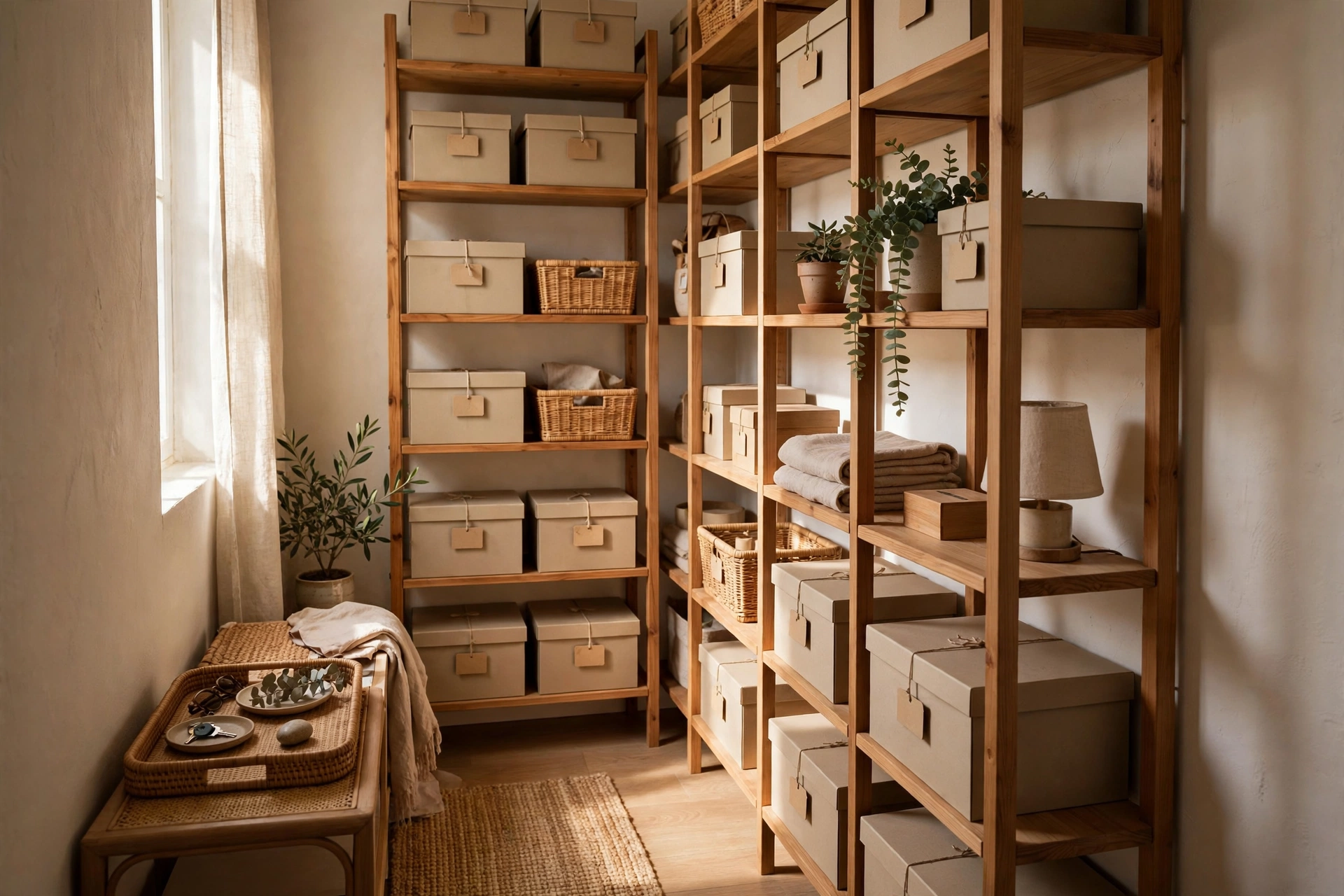
You open the door and the shoes are right there. A pile by the wall. Keys on the side. Mail on top of the keys. A bag on a chair, because the chair is the first flat spot you see. That mess does not mean your home is too small. It just means nothing has a set home yet. Give each thing a home, and the same rooms feel calm. You do not need a big spend. You do not need to drill if you rent. Start with one spot. Measure it. Then add storage in this order: tall first, hidden next, big pieces last.
Do this check first
Do not buy a box yet. Grab a tape and your phone. This takes about ten minutes. Space under the bed: measure from the floor to the bottom of the frame. Check any box against that number in the notes that come with it. Doors: open each door all the way. Note which door backs are free, and if the door still shuts well. Wall space: find the longest blank wall run in each room. Note width and height. Tall and thin beats short and wide here. Inside size: for cupboards, measure the inside, not the outside. Hinges eat space. The inside number is the real one. Your big things: measure boots, a case, games, a hoover. Good storage fits your real stuff, not a neat list on a screen. Keep the numbers in one note. A buy has to pass two checks: it fits the number, and you know what will live in it. If it fails one, leave it. Honest bit: most of us buy first and measure later. That is how homes fill up with boxes that almost fit.
Go tall, not wide
Walls are free storage. The floor is paid for. Use the height. A tall, thin shelf unit gives you lots of levels on a small floor spot. Put heavy things low. Put day-to-day things at waist to eye height. Put things you use once in a while up high. If a unit is tall, read the safety notes that come with it. Lots of tall pieces need to be fixed to the wall. Do what those notes say for your wall type. If your lease does not let you fix things, pick a lower, wider piece. The strip of wall above a door is dead space in most homes. A short, light shelf there can hold books or baskets. Keep it shallow. Not for heavy things. If you rent, pick ways that leave no marks. See renter-friendly upgrades.
Doors can hold things too
A rack or hooks on a door back can hold shoes, bags or bath things. Check door thickness against the rack notes. Check that the door still shuts clean with it on. A rack that stops the door from shutting will bug you each day. A rail or hook board keeps day tools off the work top. If you rent, look for clamp, stick-on or tension ways. Check the weight note for your wall type. Tile, gloss paint and glass hold in distinct ways. Trust the notes in the box, not the photo on the box.
Hide it under and inside
Under the bed
For most small bed rooms, this is the biggest spot no one uses. It suits flat things and one-season things: next-season clothes, spare sheets, papers you keep but do not open much. Pick boxes by your number, not by how neat they look. Soft bags bend into tight gaps. Hard boxes stack and slide with more ease. If your bed sits low, read the bed and riser notes first if you think about risers. Make sure it feels firm. If it rocks, skip it. Plain rule: if you need it each week, do not bury it under the bed. For low frames, see under-bed storage that fits low frames.
Chairs and sofas that hide things
Some sofas have a low gap for flat things like trays. A storage stool or bench can be a seat, a foot rest and a box in one. Check the inside size in the notes. The outside size tells you very little. Each big piece should do two jobs: a bed with storage, a bench with a lift-up seat, a side unit for plates and papers. We put the buy order in multi-use furniture for small homes.
No closet? Make it look calm
An open set-up can work better than a tiny closet with a bad shape. Rail plus low drawers: the rail holds hung clothes. Drawers hold fold-up things. Keep the rail to this season. If all you own is on show, it looks messy. One season, cut down, looks neat. Stand-alone wardrobe: measure the inside. Make sure doors can open all the way. Slide doors help in tight rooms. Read the wall safety notes. Curtain corner: a rod and curtain in a corner can hide a rail and shelves. It feels soft and costs little. Measure the corner first. Pick a rod made for that run, as the maker notes say. Small closet, worked harder: hang shelves, a short second rod under shirts, and thin hangers add room. Measure rod height first. A double rod only works if your height fits its size range. Full walk-through: clothes storage with no closet.
By the door, with no coat closet
This spot sets the feel for the whole home. You need just four things in reach. A low rack or tray for the shoes you wore today, not a pile. Hooks or a rail for coats and bags. A small tray or basket for keys, mail and sun glasses. A box for things on the way out: takes-backs, give-aways, bits to re-use. Use height: a tall, thin shoe unit or a rail above a low bench. If you rent, over-door and clamp ways help keep your deposit safe. Full set-up: doorway storage with no coat closet.
Room by room, in short
Bed room: under-bed for one-season things, tall thin drawers, night stands with drawers. Front room: storage stool, shut TV units, one tall shelf. Leave one top clear on purpose. Kitchen and bath: cupboard door backs, small risers, over-door spots. Measure gaps first.
Habits that make it worse
Sort before you buy sorters. If you buy first, you just hide the mess. Sets that match but do not fit waste space. Size first. Looks next. Day things need to sit at waist to eye height. Too high or too low, and you will not put them back. Do not fill to the top. Leave room for a guest bag or a big shop. About three parts full is a good aim. Do not skip weight and safety notes. That is how shelves fall. If you are not sure, go free-standing.
A weekend plan for one room
Pick the room that bugs you most. Just one. Hour one: measure it. Sort into keep, move, give away, re-use. Hour two: add one tall fix and one hidden fix. Only what your numbers said yes to. Hour three: give each thing a set home. Mark boxes you cannot see into. Take a photo. You can reset to it in ten minutes. Then stop. Live with it a week. Let what still bugs you pick the next fix.
Questions we get a lot
What is the best storage for a very small home? Start tall and hidden. One tall, thin shelf unit plus boxes under the bed add the most space for the least floor use. How do I add storage with no holes in the wall? Use free-standing pieces, over-door racks, tension rods and stick-on ways made for your wall. Check weight and wall notes in the box. Check your lease first too. Where do I put clothes for next season? Under the bed, on a top shelf, or in a case you own. Keep them clean, dry and marked. How do I stop storage from looking messy? Pick shut storage: drawers, doors, boxes with lids. Keep open shelves to things you use or love. Leave one top clear. Sort first or buy first? Sort first. Measure next. Buy last.
Your next step
You do not need more space. You need space with a name on it. This week, do the ten-minute check for one room. Add one tall fix and one hidden fix. One room at a time is enough.
How we write these guides
We start from a real snag at home. Then we read first-hand notes: size and weight notes that come with a product, plus lease and safety help from council and gov sites. We give you checks you can do at home. We flag where your lease gives the last word. We do not dress up a box note as our own test. If a number counts, we tell you where to check it.
By InterestBlog24 Editorial Team.