
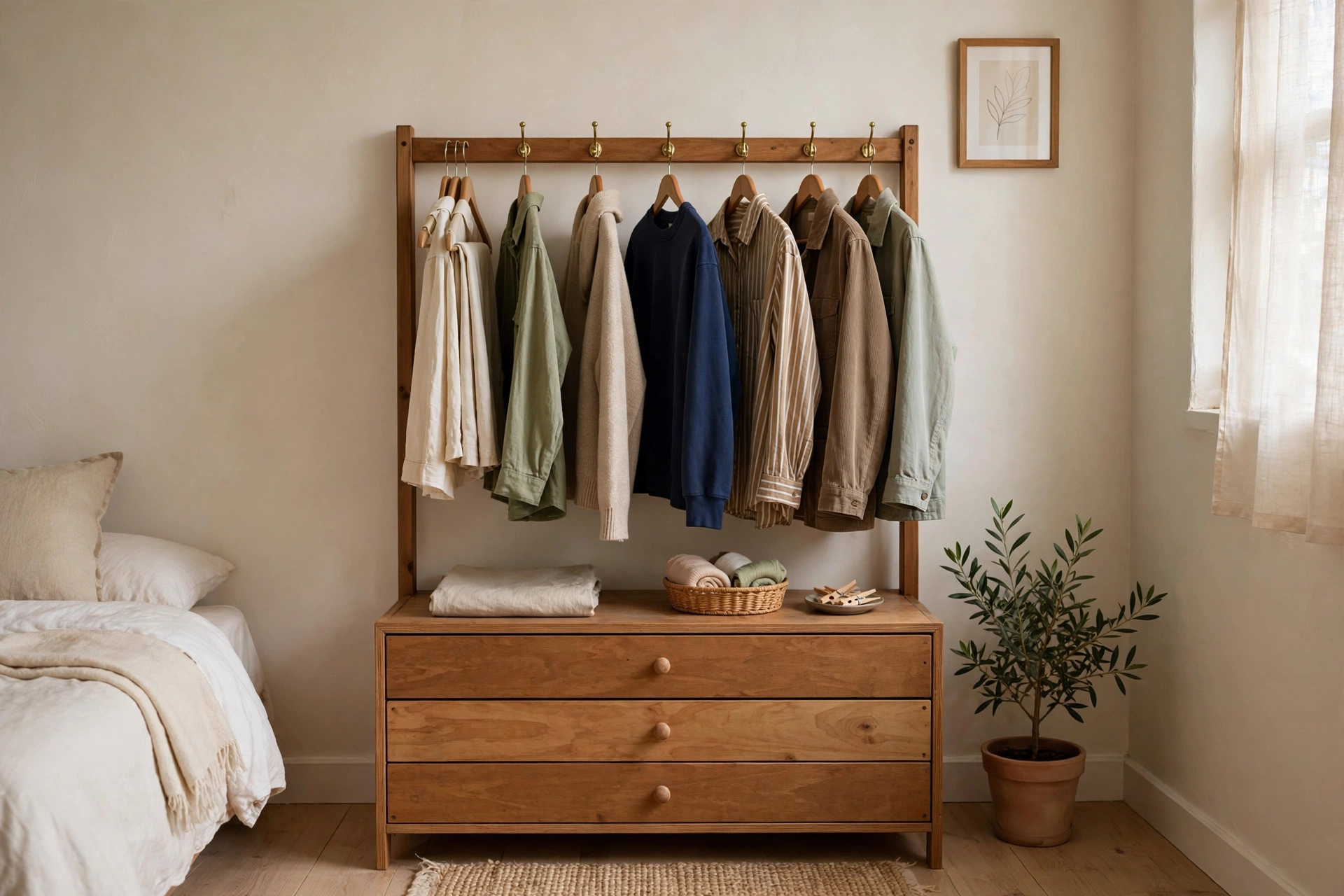
You know the chair. The one in the corner that starts with one shirt you wore for an hour, then gets a pair of jeans, then turns into a soft mountain you have to dig through each morning. Most rooms with no closet get that chair. It’s not that folks are messy. Clothes need three kinds of homes, and a chair tries to be all three at once. It fails. You can build those three homes from simple pieces that fit on one wall and move with you to the next place. For the full order for the whole flat, see small apartment storage ideas.
The three-part system: hang, fold, hide
A closet does three jobs without you seeing it. You just need to give each job its own spot. Hang: shirts, dresses, work pants, and coats that crease if they sit in a pile. These need a bar with space so air can move. Fold: knit tops, tees, gym gear, sleep wear, small clothes. Drawers, small shelves, or cubes with soft boxes. Hide: off-season bits, spare bed covers, and outfits you wear once in a blue moon. Under the bed, in cases on a high shelf, or on top of the unit you pick. Most chaos comes from one missing part. A rail alone makes you hang a sweater that wants a drawer. Cubes alone bury shirts that need to hang.
Quick answers before you buy
What do I use if I have no closet? A mix. One bar or open frame for hang, one set of drawers or cubes for fold, and bed or case space for hide. Do I need to buy it all at once? No. Pick the part that hurts most. For most folks that’s hang. Will a bar hurt my rental? Free-standing bars touch just the floor. No screws, no holes. Put soft pads under the feet on hard floors. How do I keep an open set from looking messy? Same hangers, clothes in groups, and a bit of space left free.
Size it in your room first
Wall run: measure the free wall from skirt to skirt. Note plugs, heat units and how the door swings. Longest hang piece: find your longest dress, coat or pair of pants on a hanger. The bar needs that full length plus a hand’s width on top. Hanger width: most hangers are wide — your bar needs that depth plus room for thick coats. Under-bed gap: check the gap from floor to the lowest rung under the bed. Roof height: if you want a tall unit, check the top. Tall racks need anti-tip care. Ten minutes with a tape now saves a trip back with a too-big box.
Five picks, what they’re good for
Free-standing clothes rail: cheap to start, easy to move, and you can see it all at a glance. Downside is dust and how it looks if it’s packed tight. Rail with shelves or cubes under: one piece gives you hang up top and fold down low. Check the maker’s word on how much the bar can hold. Slim open frame: looks more like furniture. If you rent, don’t fix it to a wall unless your lease says you can. See renter-friendly apartment upgrades for what to check first. Rail or alcove with a curtain front: a curtain on a bar across a nook makes a sort of door with no build. For ways to hang with no drill holes, see how to hang curtains without drilling. Soft fabric wardrobe: a fabric case on a light frame. Cheap and fast, fine for a spare room or a short stay. Treat it as a stopgap, not a long-term set. Your best pick is the one that fits your real wall, your real clothes, and your lease.
How to make an open rail look like you meant it
Use one hanger type for all. A mix of wire, wood and shop hangers screams quick fix. One type makes the row look calm. Sort by type or by hue. Long at one end. Short at the other. Leave space. A rail stuffed to the ends reads as storage. A rail with room to breathe reads as a wardrobe. Frame the top and the base. A plant or a neat box on top. A low tray for shoes at the base. Keep the floor clear around it. Two rails crammed into one tight corner tend to sag and look sad faster than one well-spaced rail. One calm set beats two rushed ones.
Fold and hide where they won’t be missed
Drawers keep knitwear clean and stop high stacks from sliding. Cubes with soft boxes can look calm even if the tops stay open. Tees and gym tops file-folded on edge let you see each piece without a dig. Under the bed is the hide spot. Low lidded boxes that fit your gap, with a label at the foot end. You want warm gear in two minutes, not a dig through three boxes in the cold. Vacuum bags shrink bulk for the deep off-season, but check the bag maker’s note on which cloths not to crush. Over-door rows of pockets hold scarves, belts, caps and small bits. Old cases can be the hide spot too. Fill an empty case with the hide list, label it, slide it up top or under the bed.
Safety and lease notes
Tall rails can tip if the load is top-heavy or if a pet or kid climbs. Put weight low, keep feet level, and follow the maker’s tips. Only fix units to a wall if your lease lets you. If a bar bends at the joints, it’s too full. Keep clothes clear of heaters and check the safe gap in your heater manual.
Your weekend set-up
Saturday: edit into keep, move, and hide piles. Measure wall run, longest hang piece, hanger depth and bed gap. Buy or order just what the tape says will fit. Sunday: build the hang part, hang by groups. Set the fold part next to it. Box and label hide bits under the bed. Fix the look: same hangers, frame top and base. Next weekend, spend a few minutes to adjust. One group will sit wrong. Move it once. The set settles after that short fix.
Mistakes that kill it fast
Buy the rail before you trim. You’ll size for clothes you don’t wear. All hang, no fold. Knitwear on hangers stretches. Too-shallow frames. Shoulders poke out, cloth rubs, dust lands. No hide part. Bulky off-season bits stay on the day rail. Two stopgaps in one corner. That’s three maybes. One calm set wins.
The simple takeaway
No closet isn’t a mess by fate. It’s a brief to meet with three parts — one home to hang, one to fold, one to hide. Size it by your own walls and your real longest coat. Trim before you buy. The set moves to the next home and keeps working.
How we check things
We build these tips from shop pages that list sizes and loads, furniture safe-use guides, and habits house pros seem to agree on. We turn it into steps you can redo with your tape. We don’t claim we tried a set if we didn’t. If a size or load note will change your pick, we tell you to check the maker’s page and your lease pages.
By InterestBlog24 Editorial Team.