
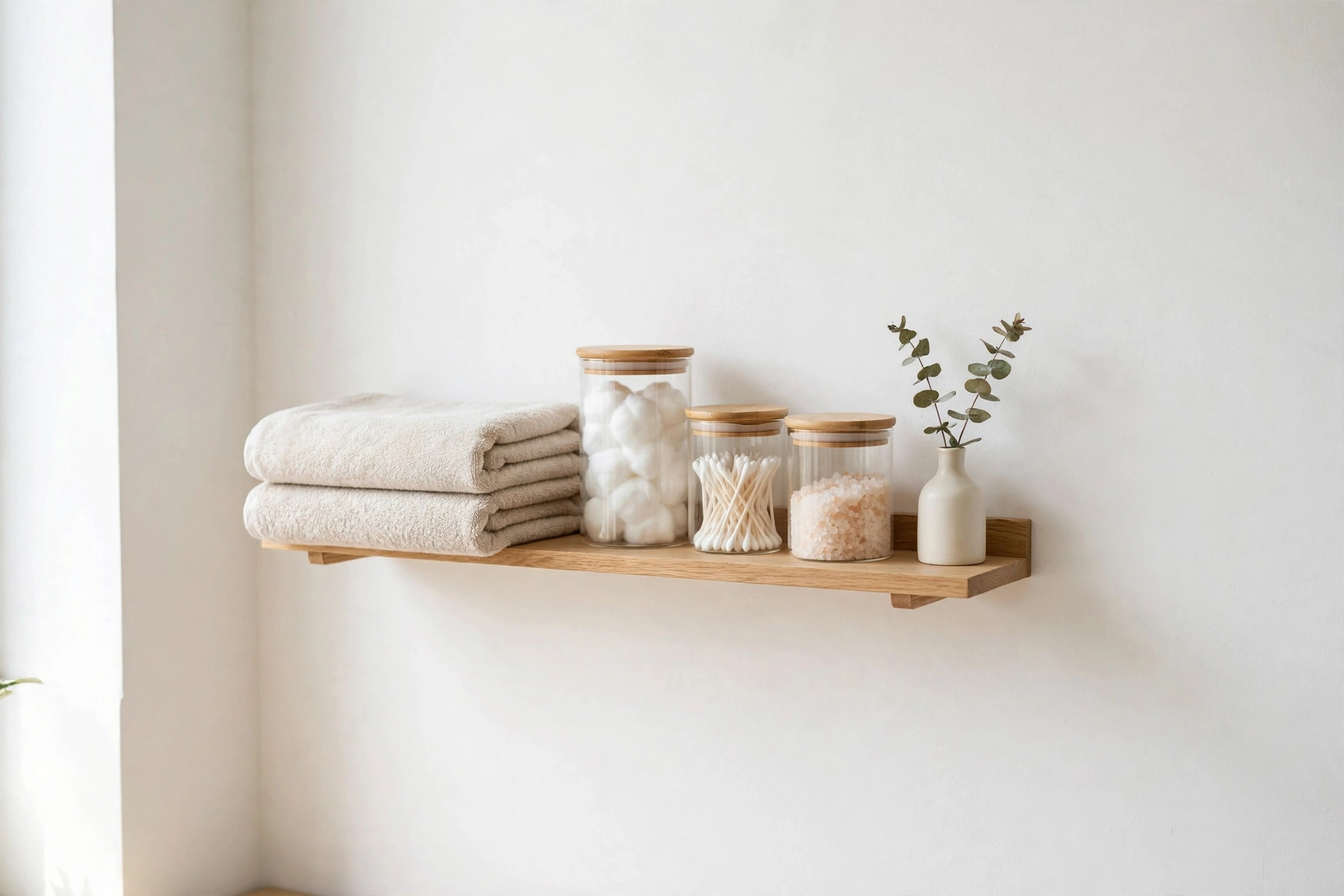
Plain answer first: no-drill shelves work well for light things out in the open. They’re a poor bet for heavy things. Stick-on, tension and clamp shelves hold in three diff ways and fail in three diff ways. Match type to wall and load to what the maker states for that shelf on that wall. Get that right and they’ll serve you. Push past it and they’ll peel, slide or lever loose.
Don’t do this: Don’t stack heavy ceramics, long rows of hardbacks or glass jars up high on a stick-on shelf. Don’t trust the top number on a box tested on tile if your wall is paint or paper. Don’t load a shelf same-day if the maker says wait for the bond to set. Don’t set a shelf over a bed or couch where a fall could land on a sleeper. Don’t put adhesive shelves on wallpaper or rough plaster and hope.
This sits in our wider low-risk rental plan — see renter-friendly upgrades — where shelves draw the most deposit rows when paint lifts with a strip.
How each type holds
Stick-on. Glue pads fix a bracket, rail or mini shelf to the wall. Hold lives or dies on prep and surface. Smooth, hard, non-soak walls — glazed tile, painted metal — bond best. Matte paint, rough plaster and wallpaper grip a weak top skin. The strip can hold and still tear paint on lift or load. That’s the renter trap. Stick to the maker’s limit for your surface and stay well back from it. Tile limit is not paint limit. Damp heat in a bathroom softens bonds, so hold less there and keep it light.
Tension. Poles wedge floor-to-ceiling, wall-to-wall in a nook, or in a cupboard or window frame. Grip comes from spring or screw push. Span, pole build and how square the sides are set the limit. Best in tight gaps — fridge side, deep cupboard, shower corner. No glue means clean lift-off, the most deposit-safe of the three. Curtain tension rods work the same — we split those out in how to hang curtains without drilling.
Clamp. A jaw grips an edge — desk, table, headboard, door top, worktop. Jaw, edge depth and stock, and how far load sticks out set grip. Short shelf, light load, thick edge = firm, no-trace win. Long shelf on a thin edge levers loose. Check the maker’s edge range and load figure. Re-tighten after week one as stock settles.
Honest weight talk — read the manual
There’s no one safe weight we can print. A guide that names one is guessing with your gear. Makers set limits per product, per surface. Mini stick-on bath shelves are for light toilet kit. Heavy-duty flat strips are for hooks and frames, not shelves that jut out and lever the glue. Clamp shelves are for light desk loads. Do this, in order: find the maker’s limit for your surface — not the star number on the box. Halve it in your head for a jut-out shelf or steamy room. Load in thirds over three days, not day one. Keep heavy or breakable kit off adhesive, score or no score. No limit listed for your surface? That’s your answer — pick another type. For exact figures, check the manual for your product and surface each time.
Quick match
Stick-on: best spots glazed tile, metal, smooth paint in dry rooms. Best loads light bath kit, spices, small decor. Usual fail paint peels, slow creep in damp. Tension: best spots nooks, cupboards, shower corners. Best loads light to mid, spread out. Usual fail slip on uneven span. Clamp: best spots desk edges, headboards, stout worktops. Best loads light desk kit, flat books. Usual fail levers loose on thin edges. Good loads: hand towels, plastic bath tubs, spice jars, a small plant in a light pot, flat paperbacks, keys by the door. Bad loads: stacked stoneware, full hardback rows, glass over hard floors, a thing over sleep space. If a fall would hurt or cost, it goes on furniture or in a cupboard — inside-door kit wins for heavy kitchen and bath bits, per small kitchen and bathroom organization.
Wall-by-wall, with quick questions
Glazed bath tile — adhesive’s best home. Clean per maker, full cure wait, light loads still. Damp works bonds daily. Can I load it now? No. Wait the maker’s full set time. Early loads cause most falls. Painted walls — highest risk. Emulsion can lift off plaster under a long pull. Lean to tension or clamp. Adhesive only for feather-light kit with paint-rated strips you’ve read end-to-end. Will it mark paint? It can, chiefly old, matte or weak paint. Test hidden, peel in the maker’s exact way. Wallpaper — skip adhesive. Paper is the weak skin; lift can tear it. Use poles or furniture. Rough or uneven walls. Pads can’t sit flat, hold dives. Pick tension between flat faces or a clamp. Inside cupboards and wardrobes — safest test bed. Tension rods add a tier. Inside-door clamps or trays hide a mark if one lands. No-closet flats gain most here — see how to create clothes storage with no closet.
Fitting and lifting, step by step
Clean, dry fully, hands off the bond patch. Press firm and even for the maker’s timed count — use a timer. Wait full cure, overnight if told. Load in thirds, pencil-mark the edge on tape to spot creep. Clamps: re-tighten at week one and after knocks. Photo the wall before and after — ten secs, settles tenancy chats. Removal: warm pad if maker allows, peel slow at the shown angle, stretch flat on wall where that’s the method. Paint lifts? Stop, follow maker’s words. Don’t yank the rest.
When shelf isn’t the answer
A slim bookcase, rolling cart or over-door rack can beat wall risk. Or ask in writing — leave for two stud screws, fill and paint pledge in hand. Yes before drill, never after. Lease bans glue word-for-word? Tension and clamp keep you clean.
Short questions
How much can adhesive truly hold? What your manual states for that shelf on that surface, minus slack for jut and damp. Figures swing by brand and build — check the book, keep it light. Are tension poles firm for books? Good poles hold light-to-mid spread loads inside maker’s per-shelf score. Hardback mass is heavy — keep low or use a bookcase. Need landlord leave for no-drill? Most leases sit these outside drill bans, but wording shifts and some ban glue outright. Read yours.
How we check our words
We go by maker manuals and printed scores, tenant deposit help in print, and checks you can copy — surface tests, cure timers, pencil creep marks. We don’t print invented lab weights. Limits stay per product and surface, as makers state them.
By InterestBlog24 Editorial Team.