

You walk in with bags in both hands. The floor is clear in the middle, but every low table is full. Coats on a chair. Shoes by the wall. Books stacked by the bed. The room is not that small. It just has no place for things to go up. That is where wall height helps. Most small homes use the low part of the room again and again. The top part sits empty. If you move a few things up, the floor opens up fast. You do not need a big shelf wall. Start small. Pick one wall. Pick the things that take floor space but are light and easy to grab.
Start by looking up, not out
Stand in the doorway. Look at the top third of each wall. Is there blank space above a door? Above a low dresser? Above the sofa? That blank space can hold things you do not use each day. Keep daily things low. Keep rare things high. That one rule stops most mess. High works for extra blankets, books, bags, paper files, board games. Low for daily shoes, chargers, keys, medicines, heavy pots. If you have to climb for it each day, you will stop putting it back. For a full base plan, read small apartment storage ideas.
Use these simple lists when you sort:
- Good up high: extra blankets in a soft box, books you read now and then, bags you use by season, paper files in a closed box, and board games.
- Good down low: daily shoes, chargers and keys, medicines you need often, and heavy pots and tools.
High things should be light, dry, and not needed in a hurry. Low things should be easy to reach with your feet flat on the floor. If you reach for it every day, do not send it up high. You will leave it on a chair instead, and the chair will become the storage. Put like with like, label the closed boxes, and keep one kind of thing in one place so you can find it without pulling everything down.
Pick one tall piece instead of many small ones
A tall, thin bookcase takes less floor space than two short boxes side by side. It also looks calmer. Measure floor to ceiling, wall width, depth, door swing. Leave breathing room on the sides. If the piece can tip, fix it the way the maker says. Check the manual. Renters ask first. If you cannot fix it, keep heavy things low. Open shelves show dust. Closed boxes hide mess. A mix works well.
Open vs closed: a mix works
Open shelves can look light. You can see a plant, a few books, and one nice box, and the wall still feels airy. The hard part is dust and mess. Open shelves show every stack, cord, and loose paper. If you are busy, they can look untidy in a week, even when the room is clean.
Closed boxes look calm. They hide the mess and make the wall look plain and quiet. The hard part is that they also hide the contents. You may forget what is inside, or buy the same thing again. A mix works best for most rooms. Use open shelves for books and a plant you like to see. Use closed, labeled boxes for cords, papers, chargers, and small loose things. Keep the box colors plain and close to each other, so the eye reads them as one calm block, not as many busy spots.
Use the space above doors and low furniture
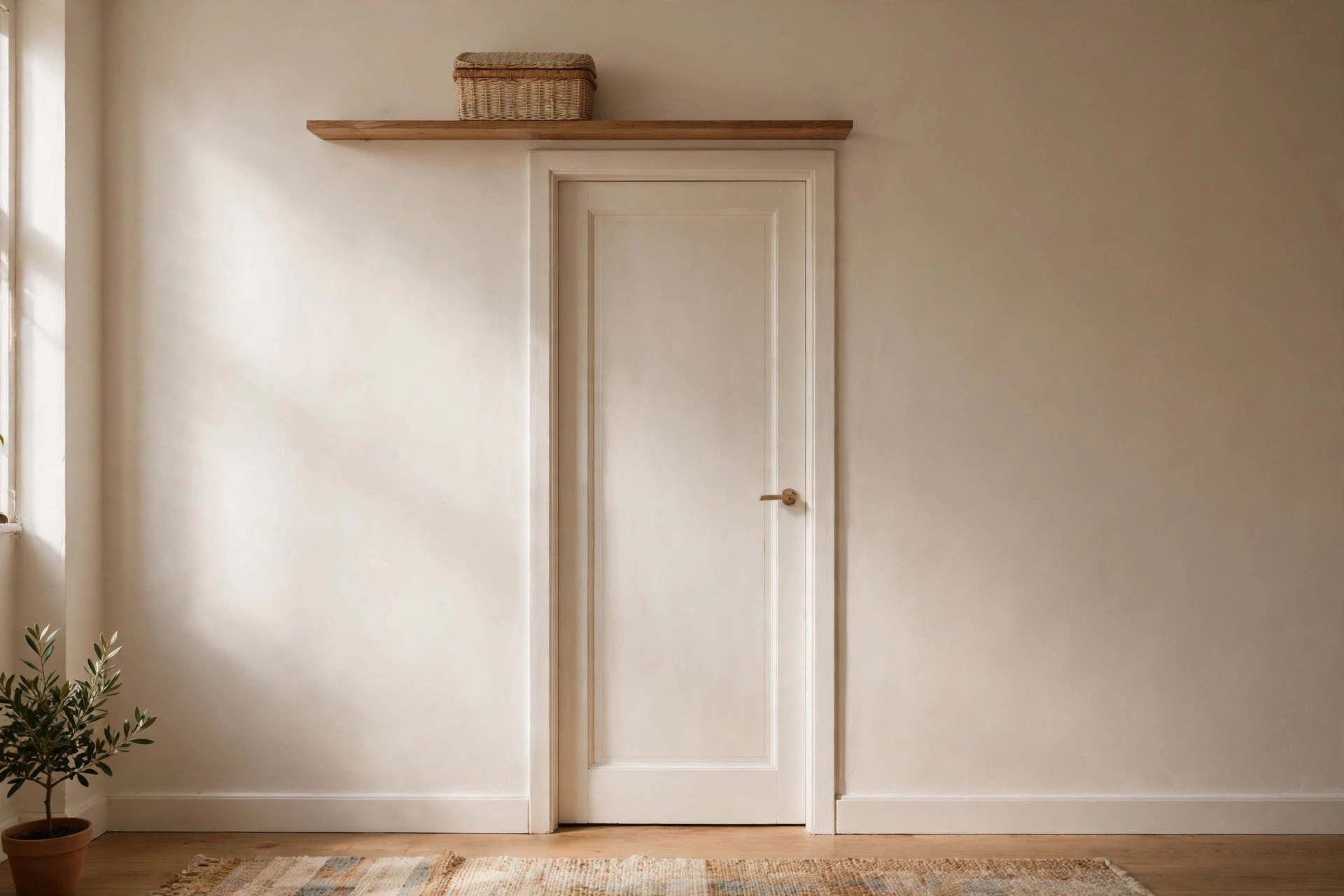
The strip above a door is dead space. A small shelf there can hold guest towels, extra sheets, seasonal hats. Keep it light, in a lidded box. Check the maker’s manual for load and wall type. Do not guess limits from a photo. Above a dresser, keep shelves shallow. Deep shelves make a room feel like it is closing in. Pair with under-bed storage ideas for low bed frames.
Good fits for the space above a door are guest towels, extra bed sheets, and seasonal hats and gloves in a light, lidded box. Some people also keep a first aid kit up high, in a place where kids cannot reach it by climbing on unsafe furniture. If you are unsure where medicines or first aid items should go, ask a pharmacist or doctor for advice for your home.
Above a dresser or desk, keep shelves shallow. A shallow shelf can hold a small box, a book, or a folded throw without hanging over your head while you sit or dress. Deep shelves above low furniture can close in a room, block light, and feel heavy. Leave clear space around them, and do not put heavy things where they could fall onto the desk or bed below.
Keep the middle of the wall calm
Top: light rare things in closed boxes. Middle: one or two open things. Bottom: furniture. Leave blank wall. Blank space lets your eye rest. Boxes in one or two calm colors look less busy. Group like with like.
No-drill ways to go vertical in a rental
Tall furniture that stands on its own — wide base, heavy books low. Over-door hooks — check door fit first. Stacking boxes — only as high as you can reach with feet flat. Sticky hooks — check maker surface/load, test light first. Tall rolling cart — thin, in a gap, lock wheels. No closet? See how to create clothes storage with no closet.
What to store high, and what to keep low
Good high: out-of-season clothes, extra bedding, books, suitcases with soft things, memory boxes. Keep low: daily shoes, chargers, keys, weekly cleaning spray away from kids/pets. Never high: things that can fall and hurt, heavy boxes, leaks, things kids may climb for.
A simple weekend plan
Day one sort: three piles — daily, weekly, rare. Day one measure: tape the wall, live with it, walk past. Day two: set up one spot only. Put rare pile away. Day two low zones: tray for keys, hook for bag, shoe spot. Stop after one wall. Live a week.
Day 1 — sort three piles: daily, weekly, and rare. Be honest. A thing you use once a month is not daily, even if you like it. Put the daily pile back low first. Then place the weekly pile where you can reach it without a step. The rare pile is the one that can go high.
Day 1 — tape the wall: use painter’s tape to mark where a shelf or tall piece would go. Live with the tape for a few hours. Walk past it, sit where you normally sit, open the door, and check the path. Does it feel tight? Does it block light? Move the tape before you move any furniture.
Day 2 — one spot only: set up one spot only, not the whole room. Put the rare things away, step back, and look from the doorway. If it already feels full, remove a box or swap a bright box for a plain one. On Day 2, give the low zones a clear job too: a tray for keys and chargers, a hook for a bag, and one shoe spot. Stop after one wall and live with it for a week. One calm wall beats three busy walls, and a week of real use will tell you what to change next.
Questions people ask
How do I add storage without drilling? Tall free-standing pieces, over-door hooks, stacking boxes, thin carts. Keep heavy low. Check manuals. What should I store up high? Light rare things. Keep daily and heavy low. How can a room feel less cluttered without buying storage? Sort first, one high zone, blank mid wall, plain boxes, clear one surface. Are tall shelves safe in a rental? If maker fixing/load followed and landlord says yes where needed. Else keep loads light/low. How high should I stack? Feet flat reach for daily. Never heavy boxes high.
How do I add storage without drilling?
Start with a tall free-standing piece with a wide, firm base. Add over-door hooks only after you check the door fit — the door should still open and close without scraping. Stacking boxes and thin rolling carts can fill a narrow gap. Keep heavy things low in every one of these options. Check maker manuals for load and surface limits, and test sticky hooks with one light thing first before you trust them with more.
What should I store up high?
Store light, rare things up high: extra bedding, out-of-season clothes, books you do not read daily, board games, and closed boxes of paper files. Keep daily things, heavy things, and things that could hurt if they fell down low.
How can my room feel less cluttered without buying anything?
Sort first and let some things go or move them to their real home. Use just one high zone instead of many small piles. Keep the middle of the wall blank, use one or two calm colors for the boxes you already have, and clear one surface fully. A clear table often makes the whole room feel calmer more than a new box does.
Are tall shelves safe in a rental?
They can be, if you follow the maker’s fixing and load advice and get your landlord’s okay where fixing is needed. Do not guess the wall type or load from a photo. If you cannot fix a tall piece as the maker says, keep the load light and low, or choose a low, wide piece instead.
How high should I stack?
Only stack daily things as high as you can reach with your feet flat on the floor. Never put heavy boxes high, and do not stack so high that boxes lean or you have to pull one box to reach another. If you need a step for a rare, light box, that is fine — but daily life should not need climbing.
How we made this guide
From common small-home problems: full floors, blank upper walls, rental drill limits. We did not test products in your home. Check maker manuals for load, fit, wall type. Measure first.
By InterestBlog24 Editorial Team.