

I lived with a rental kitchen that had one dim bulb, a stained counter edge and a drawer that held everything and nothing. Cooking felt harder than it should. The fix was not a renovation. It was light, a clear counter plan, and storage that lifted out the day I moved. Rental kitchens limit what you can change. You often can not paint cabinets, swap counters or drill at will. But you can change how the kitchen works day to day — and take it all with you. This guide stays landlord-safe: no permanent changes, nothing that peels paint or leaves holes you must hide. It builds on our renter-friendly upgrades pillar and our small kitchen and bathroom organization system. For surface films and backsplash tests, read our guide to removable backsplash and contact paper on counters for renters before you apply anything. Always read your lease and ask your landlord where rules are unclear. Rules vary by home and town.
Start with light — the fastest clean change
Dim kitchens feel small and dirty even when they are clean. Light is the first fix because bulbs and plug-in lights come out in minutes. Swap bulbs where your lease and fixtures allow. Use the bulb type and watt range the fixture maker marks on the fixture. Warmer light feels calm for eating areas. Brighter white light helps for prep. Do not exceed fixture ratings. Add plug-in or battery light under cabinets if outlets and landlord rules allow. Many renters use removable strip lights that stick or clip. Read the maker steps for surface type, heat and removal. Test a small spot first. Take lights down with care at move-out — pull as maker notes direct, often slow and low, to reduce paint risk. If paint is old or weak, ask your landlord first or skip adhesive types and use a freestanding lamp instead. Keep cords out of water and heat zones. Do not run cords over a stove or sink. Follow maker and electrical safety notes for your exact light. If you are not sure, ask an electrician or your landlord rather than guessing. A small lamp on a clear corner of counter can help if under-cabinet light is not an option. Keep it away from water splash and stove heat, on a steady base.
Clear the counter with zones, not more boxes
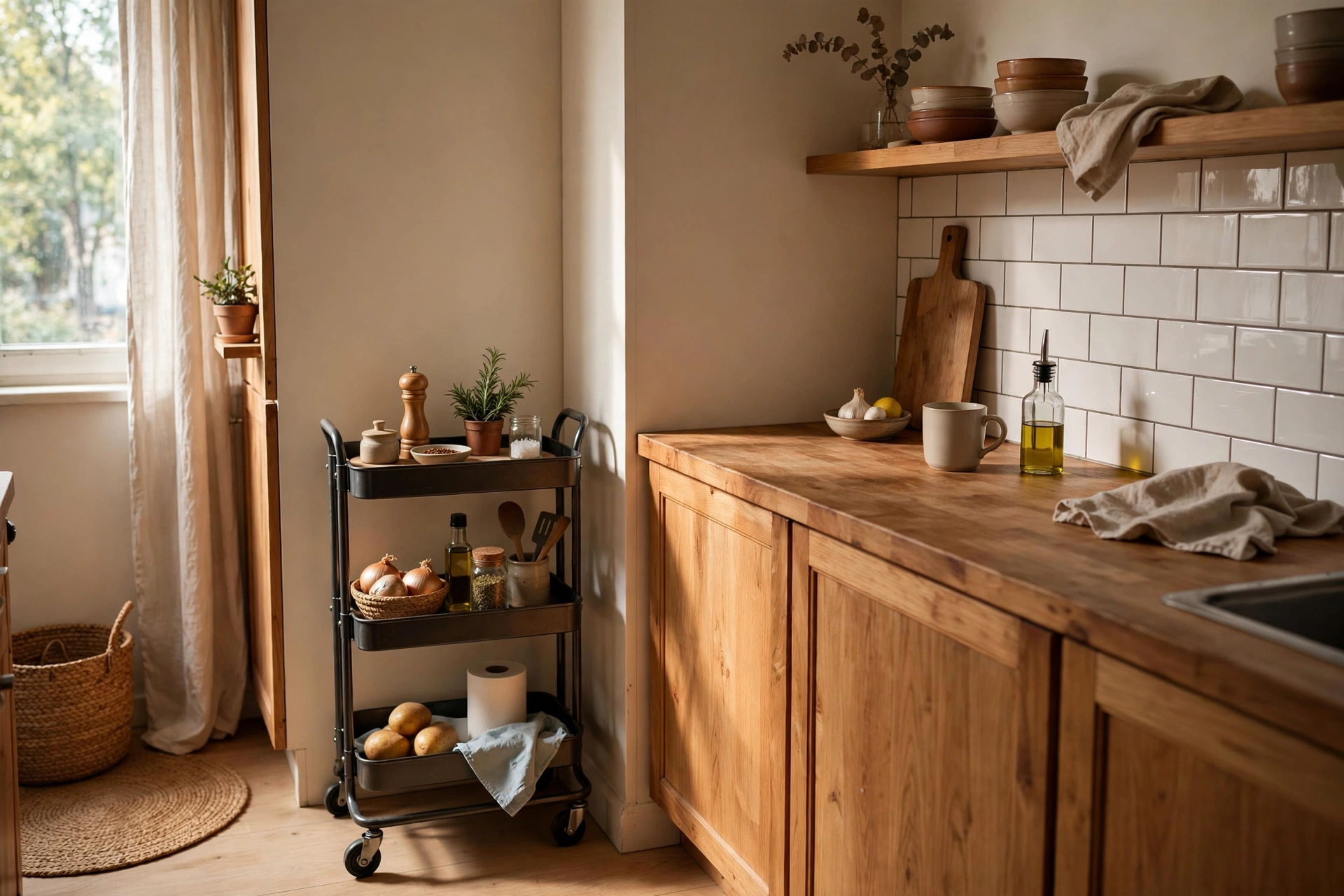
Counters look cluttered when each item claims its own spot with no plan. Give the counter zones: prep, cooking, wash and dry, daily drinks. Keep only daily items out. Store weekly items in cabinets. That one shift makes rentals feel larger because rentals often have short counters. Use a tray for daily items: oil, salt, soap, sponge. A tray reads as one item to the eye and lifts off for cleaning. Use a riser or small shelf in a cabinet to gain a level rather than spreading across the counter. Our kitchen and bathroom organization guide shows cabinet risers and bins that lift out clean. Cutting board storage: stand boards upright in a rack or file-style holder if space allows. That frees flat space and lets boards dry. Dry boards fully before storing to reduce smells. Follow maker or care notes for wood versus plastic boards. Small appliances: keep out only what you use daily. Rest live in a cabinet or on a cart. A rolling cart that fits a gap can hold appliances or pantry stock and rolls out when you move. Measure gaps, door swing and floor type. Check cart weight limits in maker notes.
Storage that comes off clean
Good rental storage needs no holes and leaves no residue. Freestanding shelves, cabinet risers, bins, and over-cabinet hooks that fit your door and landlord rules can all work. Removable hooks and strips need the right surface and weight limit — read the maker pack for your wall or cabinet surface and exact product. Test with light weight first. Skip adhesives on weak paint, wallpaper, or surfaces the maker lists as unsafe. Inside cabinets, risers and bins need no fixings. They give the biggest gain for the least risk. Measure cabinet width, depth and shelf height before you buy. Our pantry guide covers measuring and zoning step by step. Over-sink or over-stove racks: check landlord rules, heat and water safety, and maker notes for load and placement. Keep items away from open flame or heating elements as maker and stove manuals direct. If clearance is tight, skip overhead storage by the stove. Drawer dividers that expand or sit in place keep tools from tangling. They lift out at move-out. Label zones inside deep drawers if more than one person cooks. Fridge and freezer: bins inside the fridge help small rentals where shelf space is tight. Use bins rated for fridge use as maker notes advise. Keep raw meat storage as food safety rules in your area direct, apart from ready foods.
Surface refreshes — test first, know the limits
Removable films, contact paper and peel-and-stick backsplash products are popular with renters. They can also damage counters or walls on removal if the surface, product or removal method is wrong. Rules before you apply any film: read your lease, ask your landlord, read the full maker steps for your exact surface (laminate, stone, painted wall, tile). Test a hidden spot and wait as maker notes advise. Heat, water and steam by sinks and stoves lift many films. Many makers warn against use on or near high heat. If the maker says not to use a product on your surface, do not use it. That one rule saves security deposits. Our removable backsplash and contact paper guide walks through tests and removal steps in detail. Safer surface refreshes with no film: a large cutting board or washable mat over a stained prep area, a tray under a drinks zone, a washable runner on the floor. These cover without sticking. Wash or change them often so they do not hold smells. Cabinet exteriors: clean with products safe for that cabinet finish as maker or landlord notes advise. Changing handles needs landlord consent and the original handles kept safe. Many renters skip handle swaps — the gain is small, the risk of lost parts is real.
Floors, walls and soft touches
A washable kitchen runner adds color and eases standing. Pick low pile that doors clear. Measure door swing. Wash it often; kitchen floors collect grease. Curtains or blinds you hang need landlord-safe fixings. Tension rods inside a window frame need no drilling in many homes. Measure frame depth and width. Keep fabric away from stove heat and open flame as safety notes direct. Wall art or a small print with removable fixings rated for your wall can warm the room. Again, maker surface and weight notes rule. Skip heavy frames over prep or stove zones where steam and heat hit. Plants on a sill can lift mood. Keep soil and water off counters and walls. Water at the sink and drain well before you put pots back. For pet safety, check the ASPCA plant list by botanical name and ask a vet — we do not list safe plants here. These soft touches fit the wider renter-friendly upgrades approach: change what you can carry out, leave the shell as you found it.
Move-out clean removal plan
Take photos when you move in and when you apply any removable item. Note the date and product name. That record helps if questions arise. At move-out, remove items slow and as maker notes direct. Warm adhesive as directed if the maker advises heat. Pull low and slow where directed. Clean residue only with cleaners safe for that surface. Test cleaners in a hidden spot. Fill no holes you did not make. If you did get consent to drill, fill and finish as your lease and landlord direct. When in doubt, ask rather than guessing at paint or filler. Keep original items you swapped — bulbs, handles if swapped with consent, shower heads in bath — labeled in one box. Put them back before you leave.
FAQ
How do I keep a small rental kitchen from looking cluttered? Keep only daily items on the counter in zones, use a tray to group them, and store weekly items in cabinets with risers and bins. Clear counters read as clean even in small rooms.
Can I use contact paper on rental counters? Only if your lease and landlord allow it and the maker says that product is safe for your exact counter surface. Test a hidden spot first and follow removal steps. If the maker warns against your surface or heat zone, skip it.
What lighting can renters add without wiring changes? Bulbs within fixture ratings, plug-in or battery under-cabinet lights, and a steady counter lamp where safe. Follow maker steps for surface, heat and cords. Keep cords from water and stove heat.
How can I add kitchen storage without drilling? Use freestanding risers and bins inside cabinets, drawer dividers, a rolling cart that fits your gap, and removable hooks rated for your surface. Measure first and read maker weight and surface notes.
Will removable hooks damage paint when I move out? They can if the paint is weak, the surface is wrong, or removal is rushed. Follow maker prep, wait and removal steps exactly, test light first, and ask your landlord if paint is old or you are unsure.
How we made this guide
We wrote this from lease-safe rental practice, fixture and product maker notes, and plain kitchen routines for small homes. We did not test films or lights in rental units. Your lease, landlord and maker manuals for your exact surfaces and fixtures are the final say.
By InterestBlog24 Editorial Team.