

Straight answer: you do not need a matching bedroom set. A nightstand, dresser and wardrobe are three jobs: hold things by the bed, hold folded clothes, hold hanging clothes. Other pieces do those jobs in less space. If you bump knees on a dresser each morning, the dresser is too big for that room and that walk path. Measure first. Pick one swap at a time.
First, measure the room you have
Write wall length each side of bed, bed-to-wall gap, door swing (tape it), sill height, under-bed gap. Walk the night path in your mind. It must stay clear. Sort what must stay using small apartment storage ideas.
Write these five numbers down before you buy or move anything:
- Wall length on each side of the bed
- Bed-to-wall gap on each side
- Door swing — tape the full swing on the floor and check what it hits
- Window sill height, so a low piece does not block light or air
- Under-bed gap, from floor to frame and the clear height inside
Then walk the night path, from bed to door, half-asleep in your mind. That path must stay clear of carts, benches, cords, and open drawers. A swap that works in the day but trips you at night is not a good swap.
Nightstand swaps that take less floor space
Small stool or plant stand with a tray. Shallow wall shelf at bed height if drilling allowed, maker manual for load. Narrow rolling cart in the gap. Fabric pocket over frame for phone/glasses (not drinks). Firm cube as table + storage. Skip sharp corners at pillow height.
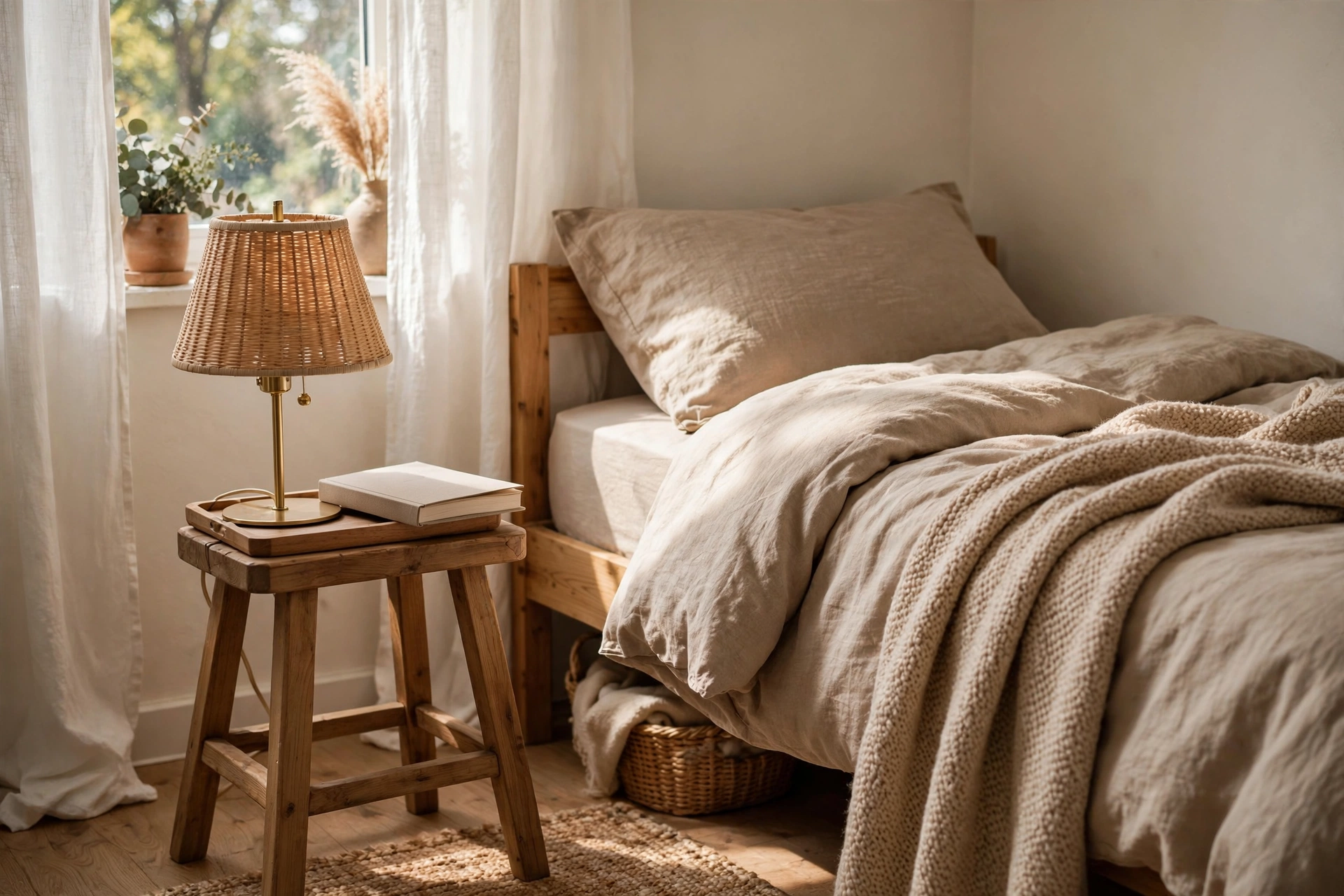
How each swap works in real use:
- A small stool: it has no drawer, so keep only a lamp, a book, and your phone on top. A tray stops things sliding off when you reach in the dark. Keep it minimal — if it cannot fit on the tray, it does not live there.
- A shallow wall shelf at bed height: it frees the floor. Renters, check drilling rules first, and follow the maker’s load guidance. A shelf for a phone is not a shelf for a pile of heavy books.
- A narrow rolling cart: lamp and phone on top, books and water below. Clean the wheels now and then so they roll well, and keep charging cords tidy and out of the walk path.
- A fabric bed pocket: good for a phone, glasses, and a paperback. It is not for drinks. Check it fits your bed frame without sagging, and keep it away from lamp heat.
- A firm cube: daily things on top, rare things inside. Pick a firm, flat top so a glass sits steady.
Skip sharp corners at pillow height on any of these. A round edge or soft piece is kinder at 2am when you reach without looking.
Dresser swaps for folded clothes
Low cube unit with fabric boxes — one box per type, label them. Under-bed drawers/boxes — see under-bed storage ideas for low bed frames. Tall thin chest instead of wide dresser. Open shelf + closed boxes. Suitcase for off-season. File fold tees upright so you see all at once.
- Cube with fabric boxes: one box for tees, one for sleep clothes, one for underwear. Label each box, or use one color per type. If a box is sagging, it is too full. Move off-season clothes to a high box instead of forcing them in.
- Under-bed boxes: good for folded clothes you wear often this season, if the box slides easily and a lid keeps dust out.
- A tall, thin chest: drawers without taking a wide wall. Put heavy things low, follow the maker’s manual for wall fixing, and ask your landlord before fixing to a wall.
- Open shelf plus boxes: fold one kind of thing per box and label the box you use most.
- A suitcase or bag: store off-season clothes there, and it frees a whole drawer for daily things.
File-fold clothes upright, like files in a drawer. You can see all your tees at once, pull one out, and not dig a mess into the rest. It takes a minute to learn, then it is faster than stacking.
Wardrobe swaps when there is no closet
Firm garment rail, weight spread even. Rail + high shelf + low cube trio — core setup in how to create clothes storage with no closet. Over-door hooks for one outfit only. Curtain in front of rail. Hang only what needs hanging; knits fold fine.
- A garment rail: choose a firm rail with a wide base and keep it off the walk path. Spread heavy coats along the bar — light rails can tip when all the weight is bunched at one end.
- Rail plus shelf plus boxes: this trio is a mini wardrobe wall. Hang shirts and dresses on the rail, put boxes on the high shelf, and use a low cube for folded clothes and shoes below.
- Over-door hooks: one outfit only, such as tomorrow’s clothes. A full row gets heavy and noisy, and may stop the door closing. Check door fit and the maker’s guidance first.
- A curtain or screen on a tension rod in front of a rail hides clothes and looks calmer. Leave a small air gap so clothes stay fresh, and wash the curtain now and then.
Keep a main closet, if you have a small one, for formal wear you use twice a year. Hang only what needs hanging — shirts, dresses, and coats. Knits and tees fold fine.
How to stop the chair pile
Worn-but-not-dirty clothes need one home: a door hook strip, a wear-again basket, or one rail-end hanger. One spot only. When full, wash or put away. 60-second night reset: shoes, hook, bin.
The chair pile grows because those clothes have no limit. Give them one home only, and a clear rule: if that hook or basket holds three things, the next thing goes in the wash or back in a drawer. That limit is the fix. End the day with the short reset above, and the chair stays a chair you can sit on.
Layout tricks
Float bed a bit only if path stays clear. Low storage bench at foot if knees clear. Keep one surface clear with a tray. Plain boxes, one pattern max. Mirror bounces light — firm renter-safe mount only.
Float the bed a little only if the path and cords stay safe — never trail a charging cord across where you walk. A bench at the foot can hold a throw, but measure the knee gap: you should pass in the dark without turning sideways or bumping it.
Keep one clear surface for a lamp, a book, and your phone. A tray sets the limit. Use plain boxes so the room looks calm, and keep bedding to one pattern at most — many bright patterns in a small room read as clutter.
A mirror on a door or wall bounces light and makes the room feel bigger. Use a renter-safe mount as the maker directs, or lean it firmly only where it is out of walk paths and away from places where kids could climb and pull it.
Questions people ask
How do I store clothes with no closet? Rail for hang, high shelf boxes, low cube/under-bed for fold. Nightstand alternative? Stool+tray, shallow shelf, cart, bed pocket — by your gap. What goes under a bed? Folded clothes, bedding, closed shoe boxes. Not food, leaks, daily heavy things. Stop the chair pile? One wear-again home + night reset. Feel less cluttered without buying? Clear one surface, move off-season out, plain boxes, blank wall.
How do I store clothes with no closet?
Use a firm rail for the few things that must hang, boxes on a high shelf for off-season things, and a low cube or under-bed boxes for folded clothes. That rail, shelf, and cube trio covers most clothes without a built-in closet.
What is a good nightstand alternative?
Match the swap to your gap. A stool with a tray works with almost no space. A shallow wall shelf frees the floor. A rolling cart fits a narrow gap and moves for cleaning. A fabric pocket holds a phone and glasses when there is no floor space at all.
What is good and bad to store under a bed?
Good: folded clothes, extra bedding, and closed shoe boxes in a box that slides easily. Bad: food, anything that can leak, heavy things you need every day, and papers that damp could harm. If under your bed feels damp, keep papers and special clothes elsewhere.
How do I stop the chair pile?
Give worn-but-not-dirty clothes one home — a hook, a basket, or one rail-end hanger. When it is full, wash or put things away. Finish with a short night reset so the pile never gets a second day to grow.
How can my bedroom feel less cluttered without buying anything?
Clear one surface and keep it clear. Move off-season clothes out of daily drawers, put like with like in boxes you have, and leave a little blank wall. Pick one swap, live with it for a week, and only then change the next thing.
How we made this guide
From common small-bedroom pain points: tight paths, oversized sets, no-closet rooms. Measure your gaps and door swing. Check maker manuals for load and fixing.
By InterestBlog24 Editorial Team.