
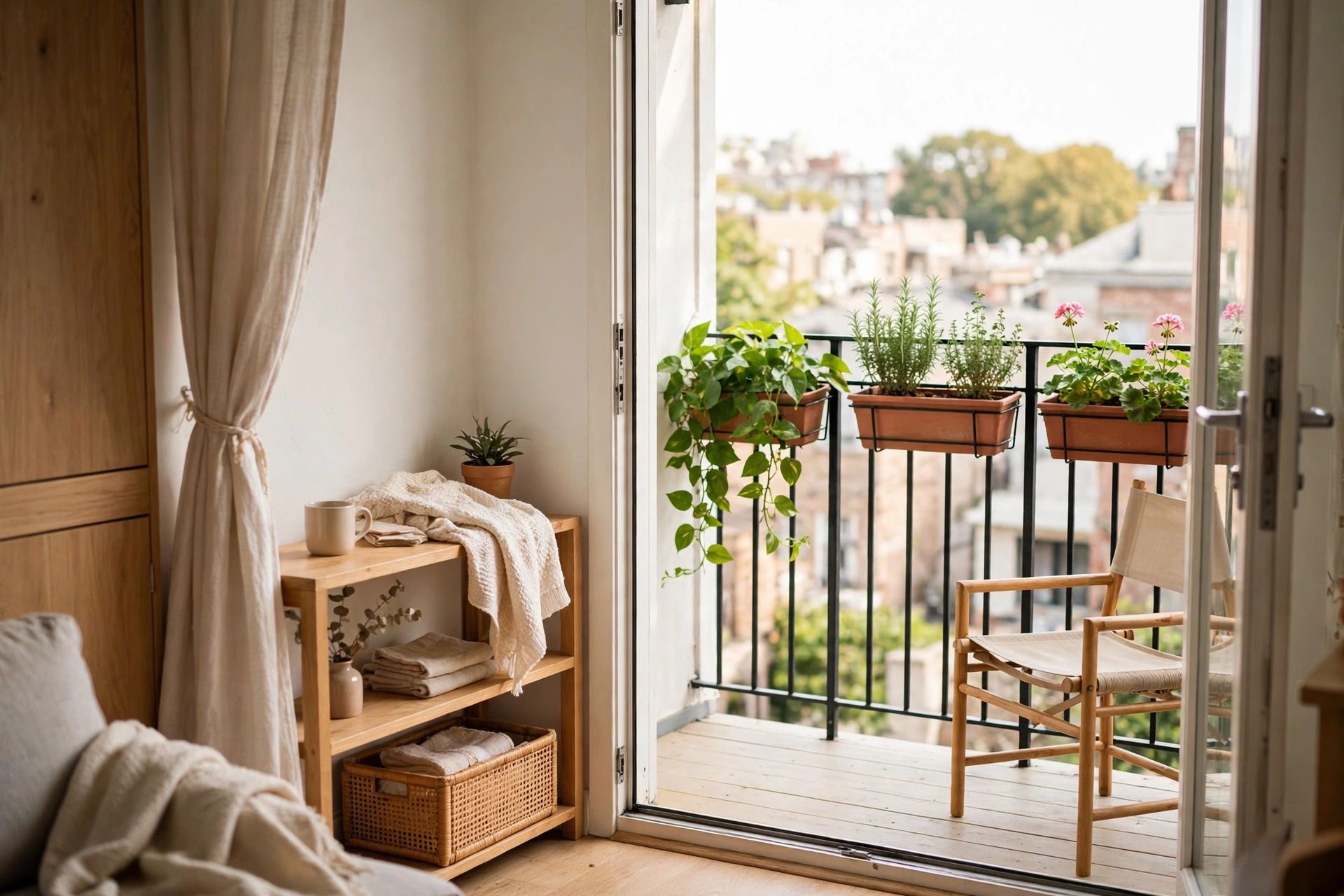
You do not need a big balcony to grow a few plants. A chair, a rail, and three pots can be enough. Renters have one extra worry. You cannot drill holes or leave marks. This guide keeps things light, easy to move, and kind to the flat below. You set it up in a day. You can take it down in an hour when you move.
Check your lease and your balcony first
Before you buy a single pot, read your lease. Some leases ban rail pots or pots that hang over the edge. Some have rules about weight on the balcony. If you are not sure, ask your landlord or agent in writing.
Check these spots before you shop:
- The rail shape and width. Measure the top of the rail and the gap below it. A pot that fits one rail may not fit the next.
- The floor. See if water runs to a drain or pools by the door. You want drips to go to the drain, not onto the flat below.
- The door swing. Leave a clear path so the door opens all the way.
- Sun and wind. Stand on the balcony in the morning and late in the day. Note which side gets sun and where the wind hits hardest.
For broader ideas on plants in tight homes, our pillar on Balcony & Indoor Plants for Small Homes covers indoor and balcony spots together.
A quick note on weight
Soil, water, and a pot add up fast. A rail pot that feels light when dry can feel much heavier after you water it. Keep pots small. Raise a pot with one hand after you water it. If it feels hard to lift, it is too heavy for a rail. Put that pot on the floor or on a low stand instead. When in doubt, read the maker’s manual for the bracket and think of the rail limit first.
Rail pots that suit renters
Rail pots sit on top of the rail or hook over it. They need no screws. That is good news for renters.
Saddle pots sit over the top of the rail like a horse saddle. They work well on flat rails. Measure the rail width first. The pot should sit snug, not wobble.
Hook-on pots hang from hooks that grip the rail. Use coated metal or plastic hooks so they do not rust or scratch the rail. Check the hook fit after you water. If the pot tips, move it to the floor.
Clip pots grip thin bars. They suit small herbs or a single flower plant. They hold less soil, so they dry out fast in sun and wind.
Keep rail pots on the inside of the rail if your lease is strict. That also cuts the risk of a pot falling in strong wind. Do not block the rail with too many pots in a row. Leave gaps. A calm line of three or four pots looks better than a packed line of ten.

Floor pots and stands that do not mark
Floor pots give you room for bigger plants. In a small balcony, one bigger pot can look better than five tiny ones. Put a tray or saucer under each floor pot. That catches drips and saves the floor from rings and damp. Raise the tray off the floor with small feet or a stand so air can flow. Check under the tray now and then and let the spot dry. Light stands made of metal or treated wood work well. Pick a stand you can move with ease. Do not use raw wood that will rot fast in rain. If you also want to keep indoor windows neat with no screws, you can pair these ideas with our guide on How to Hang Curtains Without Drilling. The same “no holes” thinking helps on both sides of the door.
Group pots in threes. Put a tall pot at the back, a mid pot in the middle, and a low pot or trailing plant at the front. The steps make a small balcony feel deeper.
What to plant when space is tight
Start with plants that suit your sun. A shady balcony will not grow sun-loving flowers well. A hot, sunny balcony will dry out shade plants fast.
- For sun: herbs you cook with, or flowers that like heat and light
- For shade: leafy greens and ferns that like damp air
Put names and sun needs on the plant tag into your phone. When you shop, you can check them fast and skip plants that will not fit your light. Keep pots close to the house wall if wind is strong. That wall gives some shelter. Move pots a bit each week to see where they grow best. For other no-drill, renter-friendly changes inside the flat, see our Renter-Friendly Upgrades guide.
Privacy without building a screen
A small balcony can feel on show. You want to sit with tea and not feel watched. You can add privacy with plants and light cloth. You do not need a fence or screws.
Tall plants in floor pots make a soft screen. Put two tall pots near the side that faces your neighbour. Leave a small gap so air moves. Do not push pots tight to the rail if your lease says to keep the rail clear.
A plain outdoor cloth tied to the rail with soft ties can help. Pick a cloth made for outdoor use so it does not tear fast. Tie it so wind cannot flap it loose. Check your lease before you tie anything to the rail. Some blocks ban rail covers.
A light trellis in a pot can hold a climbing plant. Keep the pot on the floor, not hung on the rail. The trellis must fit inside the pot and stand firm in wind. If it wobbles, bring it down.
Leave light for your plants. A thick screen can block sun and air. Thin, spaced cover works better on a small balcony.
Wind, sun, and drips: the three checks
Wind: Balconies high up get more wind. Small pots dry fast. Rail pots can swing and rub the rail. On windy days, put small pots on the floor. Group pots together so they shield each other. Never leave a tall, top-heavy plant in a light pot on a stand where it can tip.
Sun: Sun heats pots fast. Dark pots get hotter than light ones. In strong heat, check soil each day. Water in the cool part of the day. That cuts the loss of water to heat.
Drips: Water can run down to the flat below and stain walls or soak washing. Always use a tray. Water slow so the soil soaks it up. Do not throw a bucket of water over the rail. If a pot still drips, lift it and set it in the tray to drain before you put it back. Wipe up puddles near the door at once. Wet tile can be slick.
A simple one-day setup plan
- Morning: Read the lease. Measure the rail. Note sun and wind spots.
- Shop with a list: One tray per pot, pots that suit your sun, soil for pots, and soft ties if you plan a cloth screen. Measure pots in the shop. Do not guess.
- Set the floor first: Place floor pots and stands. Leave the door path clear.
- Add rail pots: Fit one, water it, and check the grip. If it sits firm, add the next one.
- Add privacy: Place tall pots or a cloth. Sit in your chair and test the view.
- Water check: Water each pot slow. Watch where drips land. Fix trays now, not later.
Take a photo when you are done. It helps you put things back the same way after you clean.
Frequently Asked Questions
Can I put pots on my balcony rail if I rent?
It depends on your lease. Many leases allow small pots on the inside of the rail. Some ban any pot that hangs over the edge. Read your lease first and ask if you are not sure. Start with floor pots if the rule is unclear.
How do I stop balcony pots dripping onto the flat below?
Use a tray or saucer under every pot. Water slow and let the pot drain into the tray. Tip extra water into your sink, not over the rail. Check under trays after rain too, since rain can fill them.
What if my balcony is very windy?
Put small pots on the floor, not the rail. Group pots close, keep tall plants near the wall, and use heavier floor pots for height. Move light pots inside or down low on storm days.
How can I add privacy without drilling?
Use tall plants in floor pots on the side you want to screen. Add a plain outdoor cloth tied with soft ties if your lease allows it. Space the cover so air and light still pass through.
What pot size should I pick for a rail planter?
Measure your rail first: the width of the top and the space below. A rail pot should sit firm with no wobble after you water it. Start small. If you cannot lift the pot with one hand after watering, it is too heavy for the rail.
How we made this guide
We pulled this guide together from renter lease tips, plant seller care sheets, and plain home care advice. We did not set weight or size rules, because each rail and lease is different. Measure your rail, check your lease, and read the maker’s manual for any bracket or pot you use.
By InterestBlog24 Editorial Team.